









Kubernetes consulting from a KCSP-certified partner
Kubernetes check-ups, adoption, support and training, on-premises or on AKS, EKS and GKE. We work on your clusters together with your team.
Kubernetes orchestrates containers. We take it to production with your team.
Kubernetes consulting helps a company adopt and run Kubernetes (K8s), the open source platform that automates deployment, scaling and management of containerized applications. SparkFabrik is an AI Native Engineering company that designs and runs Kubernetes clusters for clients such as Deltatre and Ecolab.
Kubernetes is the standard for cloud native architectures. We implement it on Google Kubernetes Engine, Amazon EKS, Azure AKS and on-premises, and we transfer to your team the practices to run it.
The vast majority of organizations use Kubernetes or are evaluating it.
Results
What changes for your team
Scalability and cost optimization
The cluster grows with traffic peaks and shrinks when the load drops, so you pay for what you use.
More frequent releases
Rolling updates and automatic rollbacks: you fix errors sooner and collect user feedback sooner.
Portability across clouds
The same workloads run on GKE, EKS, AKS or on-premises: changing provider does not mean rewriting your applications.
Check-up, adoption, architecture, security and training.
From a second opinion on an existing cluster to training your team.
Second opinion and assessment
Kubernetes Check-Up
A second opinion on the cluster you already have: security, performance, scalability and costs, with the priorities for action.
- Assessment of existing clusters
- Network and storage configuration review
- CI/CD pipeline and DevOps process analysis
- Security and compliance policy review
- Detailed report with operational recommendations
- Managed k8s services configuration check (AKS, EKS, GKE)
- Cost optimization with FinOps
From planning to production
Kubernetes Adoption
To adopt Kubernetes from scratch or move existing workloads onto it: from planning to the first release in production.
- Initial assessment (Kubernetes Check-Up)
- Kubernetes architecture design
- Choosing the most suitable k8s provider (AKS, EKS, GKE)
- Application containerization and migration
- CI/CD pipeline implementation
- Security & Supply Chain Protection
- Training and operational support
Multi-cluster and service mesh architectures
Kubernetes Architecture & Scalability
Multi-cluster and service mesh architectures, designed for high availability and resilience.
- Multi-cluster infrastructure design
- Service mesh implementation (Istio, Linkerd)
- Advanced networking (CNI, ingress controllers)
- Automatic scaling (HPA, VPA)
- Log management and observability
From legacy to microservices
Application Containerization & Modernization
We bring legacy applications into containers on Kubernetes, to make them more flexible and easier to manage.
- Application portfolio assessment
- Monolithic application containerization
- Microservices adoption
- CI/CD pipelines for Kubernetes deployment
- Resilience testing and rollback strategies
End-to-end security
Kubernetes Security & Supply Chain Protection
Security for the cluster and the software supply chain, from container scanning to CI/CD pipeline protection.
- Security policy implementation (OPA, Kyverno)
- Container image scanning and vulnerability management
- SBOM integration and code signing
- Advanced monitoring and proactive alerting
- CI/CD security checks
Modular and advanced training
Cloud Native Enablement & Training
Modular training on Kubernetes and cloud native practices, from cluster management to advanced CI/CD.
- Kubernetes basic and advanced modules
- Hands-on workshops on CI/CD, service mesh and security
- Kubernetes and DevOps specific training
- Real-world exercises on Kubernetes infrastructure
- Post-training support for questions and deep dives
Success Stories
Kubernetes in production for our clients.
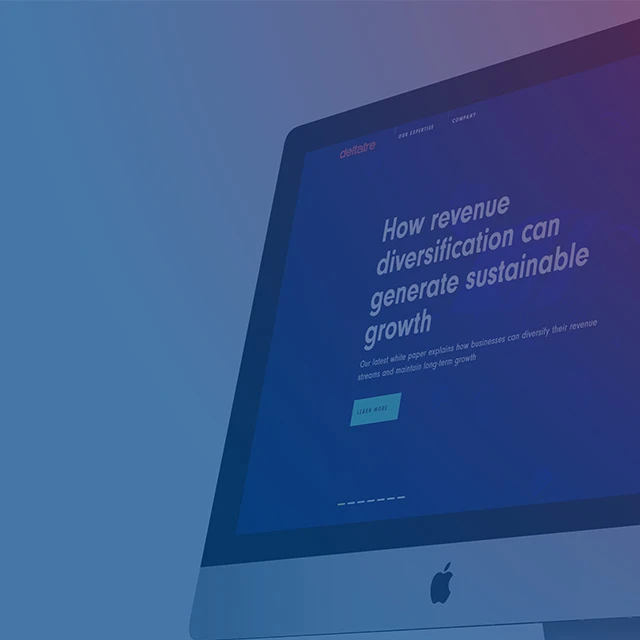
 Sport and media
Deltatre brings its teams to cloud native: infrastructure as code, GitOps and local environments aligned with the pipelines.

 Manufacturing
Ecolab gives its developers Digital Runway, an Internal Developer Platform.

Kubernetes Certified Service ProviderCloud Native Computing Foundation 
CNCF memberCloud Native Computing Foundation 
OpenSSF memberOpen Source Security Foundation 
ISO/IEC 27001, 27017, 27018Information security
After adoption: support, monitoring, backup.
On new or existing clusters, on-premises or in the cloud.
- 01
Support
Support and troubleshooting in your context, also on clusters you already run.
- 02
Monitoring
Monitoring surfaces problems before they reach users.
- 03
Backup and recovery
Backups and recovery plans for every scenario, to keep applications and data safe.
Resources
Further reading
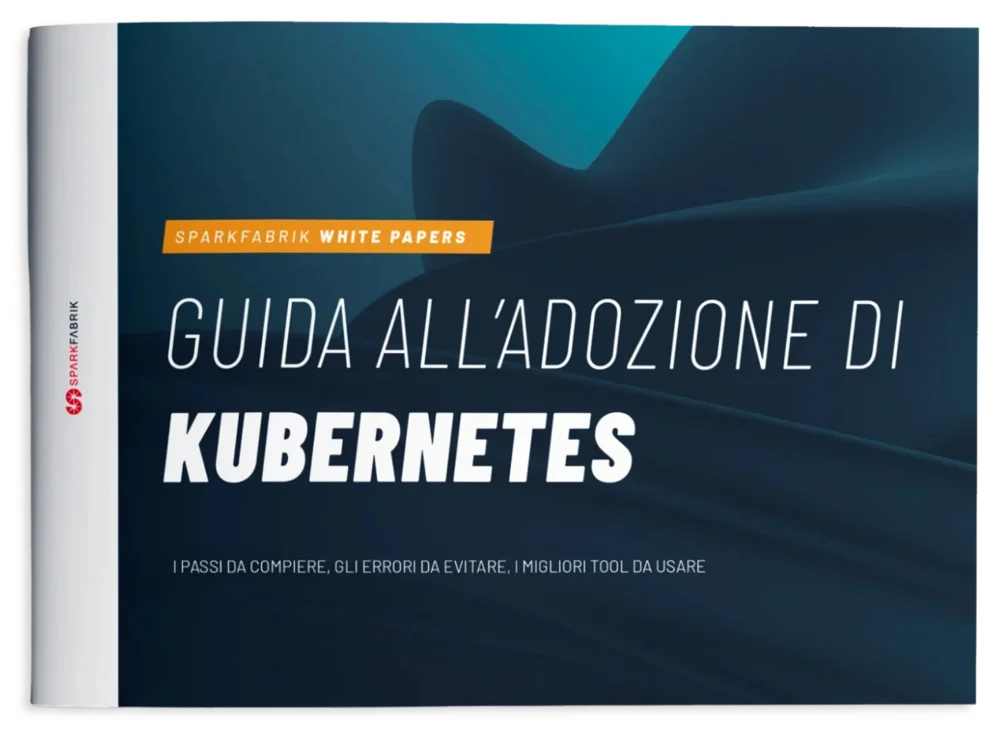
Whitepaper · PDF
Guide to Kubernetes adoption
The best practices and the mistakes to avoid.
Download the guideFrequently asked questions.
About Kubernetes consulting.
Who provides certified Kubernetes consulting in Europe?
SparkFabrik is a Kubernetes Certified Service Provider (KCSP), a CNCF certification that attests verified skills in designing, implementing and running Kubernetes clusters in production. Since 2015 we have helped Italian and European organizations adopt Kubernetes with training, implementation and support.
Do you use AI on our projects? With what guarantees?
Yes. AI helps us with analysis, configuration and review. Every change to the cluster goes through tests and pipeline checks, and a person on the team approves it. Configurations and rules stay in your repository, and the cluster stays yours, on any cloud or on-premises.
What does it mean to be a KCSP (Kubernetes Certified Service Provider)?
KCSP is the program through which the CNCF qualifies Kubernetes service providers. To obtain it, a company needs at least three CKA-certified people and must be a CNCF member. It must also support enterprises that use Kubernetes, with people who work with customers onsite or remotely. Our team also holds CKAD and CKS certifications.
SparkFabrik is among the few Italian companies to have obtained this certification.
What Kubernetes certifications exist?
The main Kubernetes certifications from the CNCF are:
- CKA (Certified Kubernetes Administrator): cluster administration
- CKAD (Certified Kubernetes Application Developer): application development
- CKS (Certified Kubernetes Security Specialist): security
- KCNA (Kubernetes and Cloud Native Associate): entry-level
- KCSA (Kubernetes and Cloud Native Security Associate): security, entry-level
The SparkFabrik team includes CKA, CKAD and CKS certified professionals. We also offer certification preparation courses.
Kubernetes on-premises or cloud: which to choose?
The choice depends on your specific needs:
- Cloud managed (GKE, EKS, AKS): ideal for fast time-to-market and less operational overhead
- On-premises: necessary for compliance requirements, data residency or predictable costs
- Hybrid: combines the advantages of both for different workloads
We help you evaluate the optimal solution during the assessment phase.
Is Kubernetes right for my company?
Kubernetes is the ideal choice if you need:
- Automatic application scaling
- High availability and resilience
- Frequent and automated deployments
- Efficient microservices management
- Portability between cloud providers
The first conversation comes with no commitment: we use it to work out whether Kubernetes is the right solution for your use case.
How long does it take to adopt Kubernetes?
Timelines depend on how many applications you bring to Kubernetes, how they are built and how familiar your team already is with containers. Adoption goes in phases:
- PoC or pilot: a first working cluster
- Migration of a single application
- Complete migration of the ecosystem
- Cloud Native Journey: on-the-job training for your team, in four phases
Every phase leaves something that works. We discuss it in a first conversation, with no commitment.

Talk to the CEO or the CTO.
Tell us whether you start from scratch or from an existing cluster, and on which cloud. We will tell you where we would start.
Tell us about your project

Updated