It searches only where it should
It indexes only the content you choose, with the permissions of the person searching.
People type a question and find the passage of the page that holds the answer, even when their words differ from the site’s.
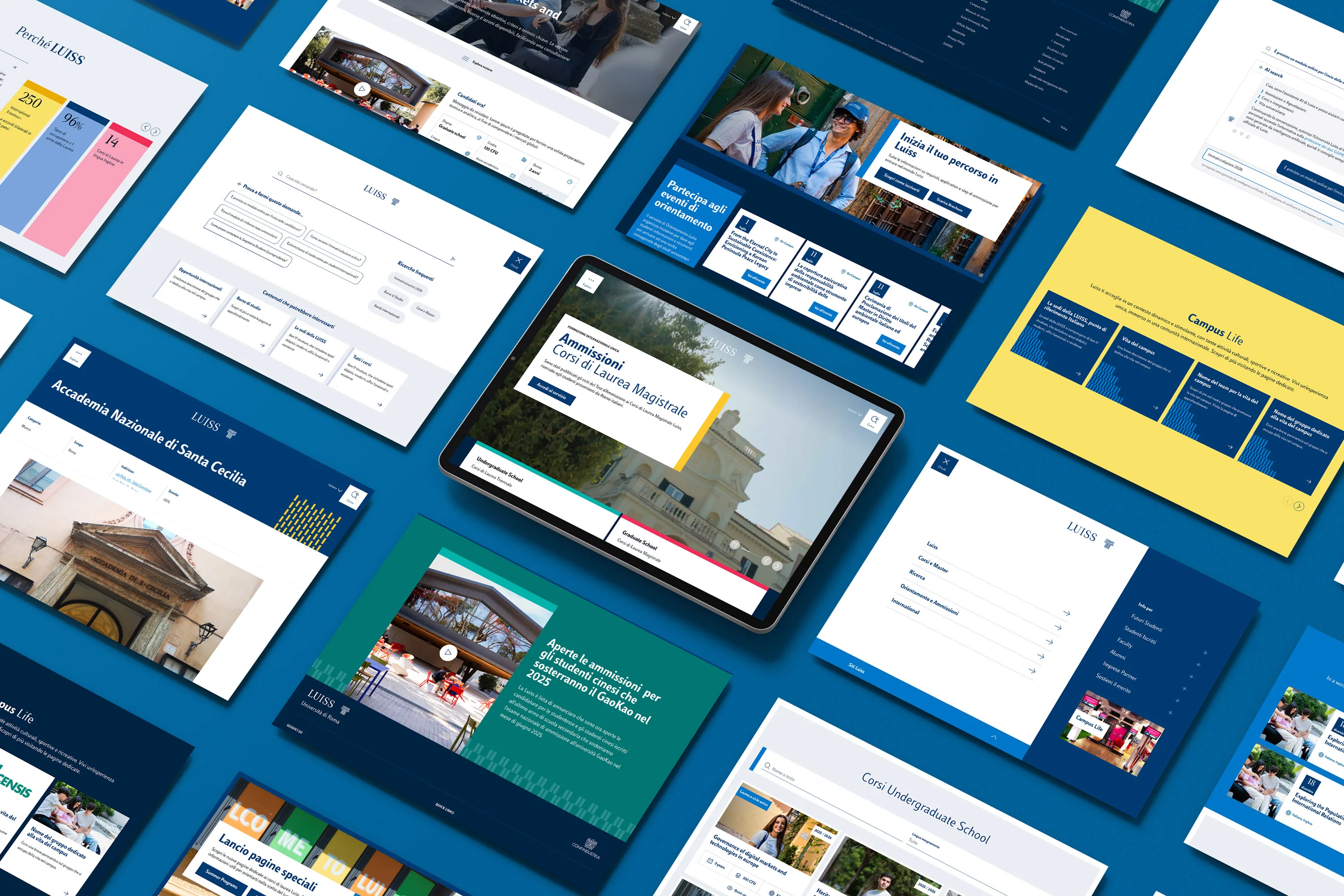
Semantic and agentic search is a search engine for websites and portals that understands the meaning of a question and answers with the official content, citing the page. SparkFabrik is an AI Native Engineering company that designs and runs the conversational search of the Luiss website.
Users are used to asking an AI and getting an immediate answer. On a site with thousands of pages, classic search returns a list of results, often wrong when the words do not match.
People who cannot find what they need call, write or leave. And a generic assistant, plugged into the site with no rules, risks answering with what is not there.
A conversational search that answers on the page, precise because it is anchored to your content.
Finds by meaning
Search understands what the question means: “duplicate card” finds the page about a new badge. The result is the passage that answers, with a link to the page.
Site searchInteractive example · sample pages
How do I request a duplicate card?
By keyword3 results
Library card: rules…the card is personal and…
Fee refund requests…how do I request a refund…
Student forms (PDF)List of forms…
By meaningthe answer
If it is lost or stolen, you can request a new badge from the student portal, in the Services section. You collect the new badge at the registry office.
Lost university badge ↗duplicate ≈ new badgecard ≈ badge
Try a question
Words and meaning
Hybrid search: lexical and semantic, with filters and sorting. Every result explains why it is there, across product sheets, documentation and editorial content.
Technical catalogueInteractive example · sample catalogue
valve for a solar system that withstands high temperatures
3 results
Thermostatic valve for solar circuits
Why it is here: “solar” in the title, and the sheet gives the maximum operating temperature, which is what you ask.
word: solarmeaning: high temperatures
Guide to choosing solar thermal components
Why it is here: it covers the heat resistance of components, even though it never says “valve”.
meaning
Solar thermal in summer: how to protect the system
Why it is here: it explains what happens to components when the circuit exceeds its design temperatures.
word: systemmeaning: high temperatures
You see what is missing
A dashboard shows the people who manage the content the questions, the results and the unanswered questions, and shows which content is missing or badly written.
Editors' dashboardInteractive example · sample data
Unanswered questions, most frequent first
Where it helps most: universities, public administrations, technical catalogs, large editorial archives.
Search understands the meaning of the question and finds the right content even when the words used differ from the ones on the page.
How do I request a duplicate card? Search answers with the passage of the page that holds the answer, and the link to the page.
Search by meaning across data sheets, documentation and editorial content, with filters and results that explain why they are there.
Agents and chatbots use search as a tool: they answer only with the indexed content, with guardrails on.
A pipeline indexes the content, the search combines words and meaning, and agents know when to use it.
CMS pages and documents turned into structured text and embeddings, updated when they change.
A hybrid search on Typesense: lexical and semantic, with filters and sorting.
An agent decides whether and how to use search. Other tools connect through the MCP client we maintain, enabled one by one.
Answers only from the indexed content, moderated conversation, unanswered questions logged.
A search with AI inside is governed like a production system.
It indexes only the content you choose, with the permissions of the person searching.
The conversation is moderated and the answers stay inside the indexed content.
The dashboard shows which questions go unanswered.
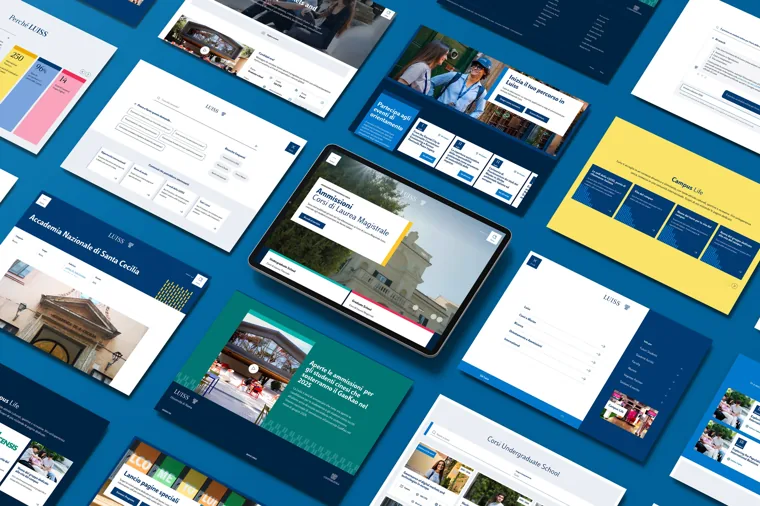
The numbers come from the Luiss platform, built with open source modules we maintain.


Your content, ready to be searched
CMS pages and documents, updated automatically when they change.
Words and meaning
Configuration of hybrid search, filters, sorting and languages.
Where people search
The search component on the site or the portal, accessible and consistent with the design system.
What works and what does not
The question log and the dashboard for the editorial team.
We look at the content, the most frequent questions and the perimeter of the search.
You leave withThe list of questions the search must answer and of the content to index.
Indexing, search and interface, tested on real questions.
You leave withThe new search live, with metrics in place.
Agents, a conversational assistant, new sources and new languages.
You leave withA search that grows with the content.
Bring us the questions you get most often. We show you what the search would find, and where from.
A solution is made of our services, put together for one precise problem.
Search runs on open source modules we maintain on drupal.org, such as Search API Typesense: no license and no lock-in to a vendor.
The questions you are already asking.
Classic search looks for words. This one looks for meaning: it finds the right content even when people use words different from the ones on the page, and answers with the passage that holds the answer.
Yes. We build the search with the same method as all our projects: specification before code, tests and review, and a person who approves every release. It runs on open source modules we maintain, such as Search API Typesense, and indexes only the content you choose, with guardrails active on the answers.
Drupal is the most frequent case, with the modules we maintain. Indexing can also include documents and other sources.
Search returns existing content. When there is a conversational layer, it answers only with the indexed content and with guardrails on.
The ones on your site. Semantic search also works across different languages.
It depends on the amount of content, sources and languages. The Discovery gives you the order of magnitude.
Tell us what you publish and what you are asked most often. We will tell you where we would start.
Tell us about your projectUpdated
Services
Resources