 University
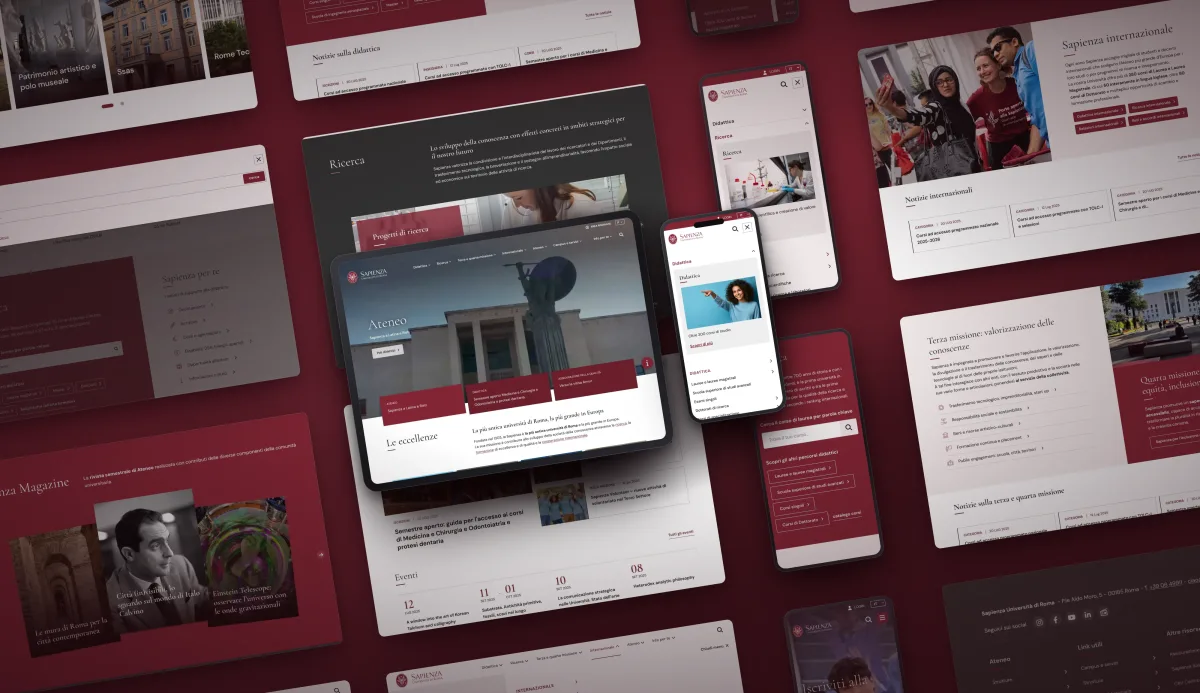
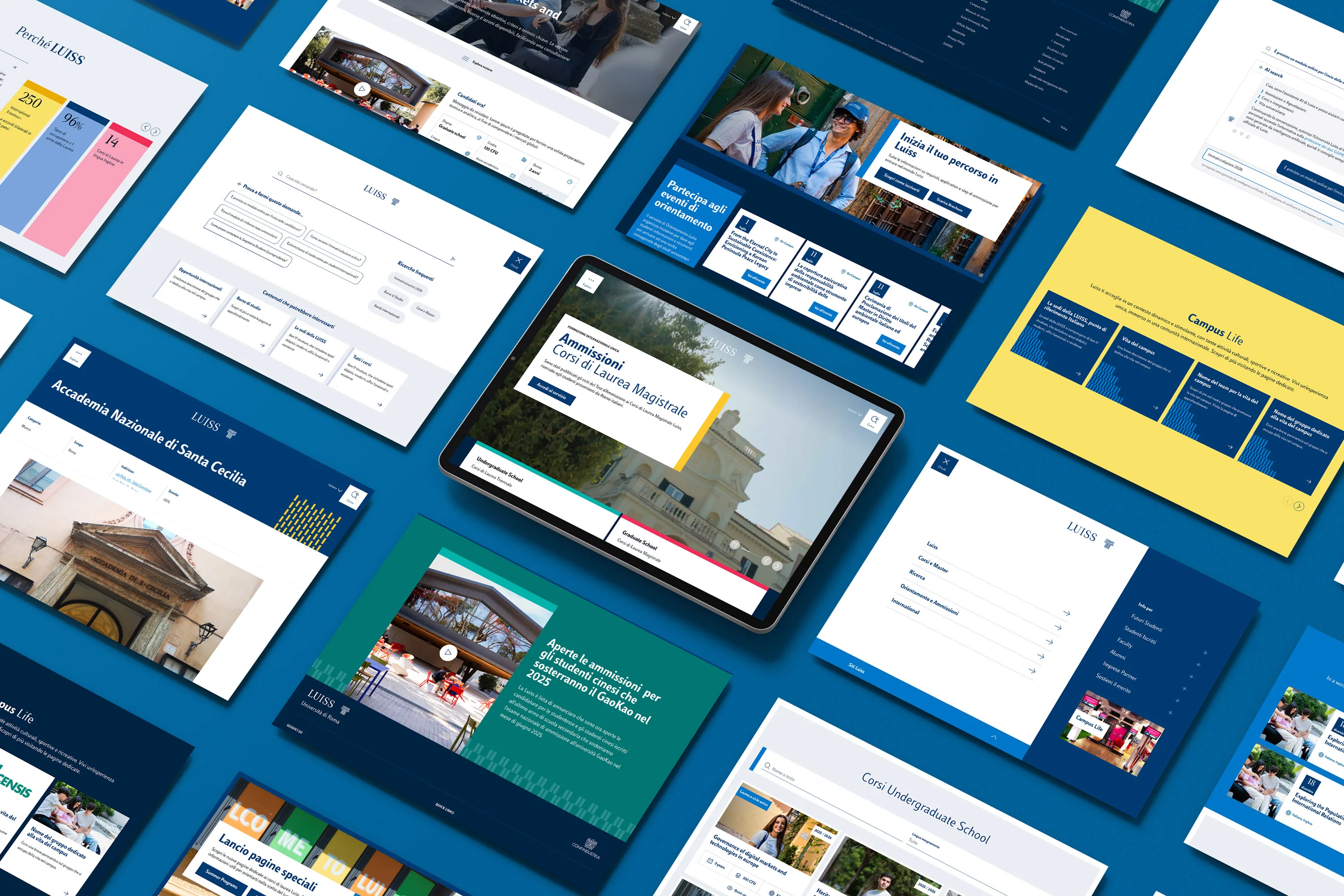
Luiss rebuilds its digital presence as an ecosystem: multibrand design system, Drupal and search with agentic AI.
−70% in content publishing time
Your editors publish on every site, brand and language on their own, without raising a ticket or waiting for anyone.
A multisite, multilingual CMS manages the content of many sites, brands and languages from one platform, with shared components and rules. SparkFabrik is an AI Native Engineering company that builds these platforms on Drupal for clients such as Caleffi, Zambon and Luiss.
If changing a page takes a ticket, the platform is the problem, not your editorial team. With many sites, every edit goes through IT or an agency. Content gets duplicated, the CMS renewal costs more every year and nobody is sure which version of a page is the real one.
Decision makers buy more than a CMS: they buy an editorial team that can publish the next page itself.
One platform for content, sites and languages, run by your own team.
One system for every site
Content, components and brand rules live in one place; every site, country and brand takes what it needs and adds its own.
One platform, many sitesInteractive example · sample sites
marchio.itIT
marchio.deDE
marchio.cnZH
secondo-marchio.comEN
secondo-marchio.frFR
fondazione.orgIT · EN
Editors publish without waiting
Writers build the page with the design system components, see it as it will look, send it for review and publish it: roles and workflows decide who approves.
Editor · Page “New customer service”Interactive example · sample page
Hero · approved component
Text
Image
FAQ
Preview as it will lookAccessibility checks passed
AI helps the writer
Drafts, rewrites and translations enter the review workflow as proposals: nothing goes live without a person’s approval, and the record says who approved what.
Translation · Page “New customer service”Interactive example · sample texts
ItalianPublished
Il nuovo servizio clienti risponde dal lunedì al sabato, anche via chat.
EnglishAI proposal
Our new customer service answers from Monday to Saturday, also by chat.
Nothing goes live without a person's approval
One of these is probably yours.
Roles and review workflows decide who approves, and the page goes live with no detour through IT. FiscoOggi works this way, with almost 600 authors and 12 officials on the same platform.
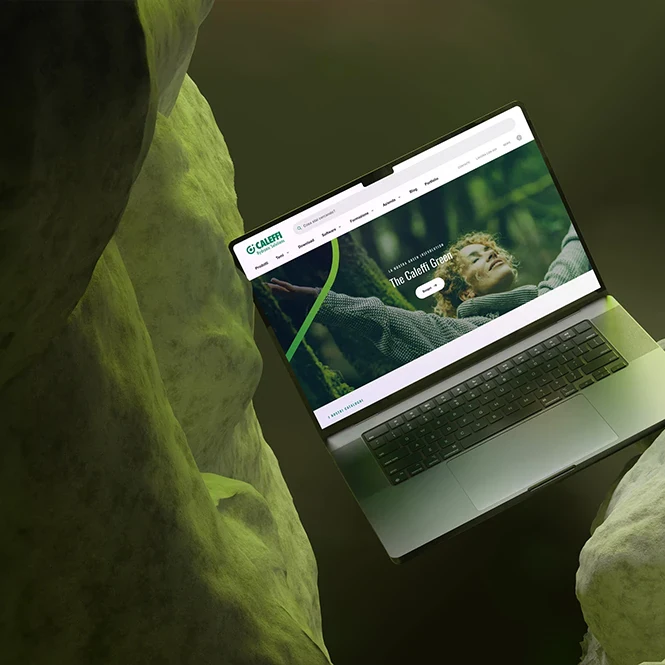
One platform, one design system, many sites. Caleffi runs 30 countries and around 20 languages on a single platform, and every local office reuses content created by the others. Zambon consolidated its corporate sites onto one design system, then onto a platform that new sites are built from.
Accessibility and security are a project requirement, set from day one. The baseline is WCAG 2.2 AA and EN 301 549, delivery happens inside an ISO/IEC 27001, 27017 and 27018 certified perimeter, and security patches come from the open source project’s security team.
AI proposals enter the review flow like any other draft, and a person always publishes. We know the guardrails from the inside: we contribute to Drupal’s AI modules.
The platform is open source: no license to pay for, and public code that stays yours.
FiscoOggi, the Italian Revenue Agency’s online magazine, migrated over 42,000 content items, 35,000 images and 2,700 media files with almost 600 authors at work. A migration is a project with a method: inventory, batches, verification.
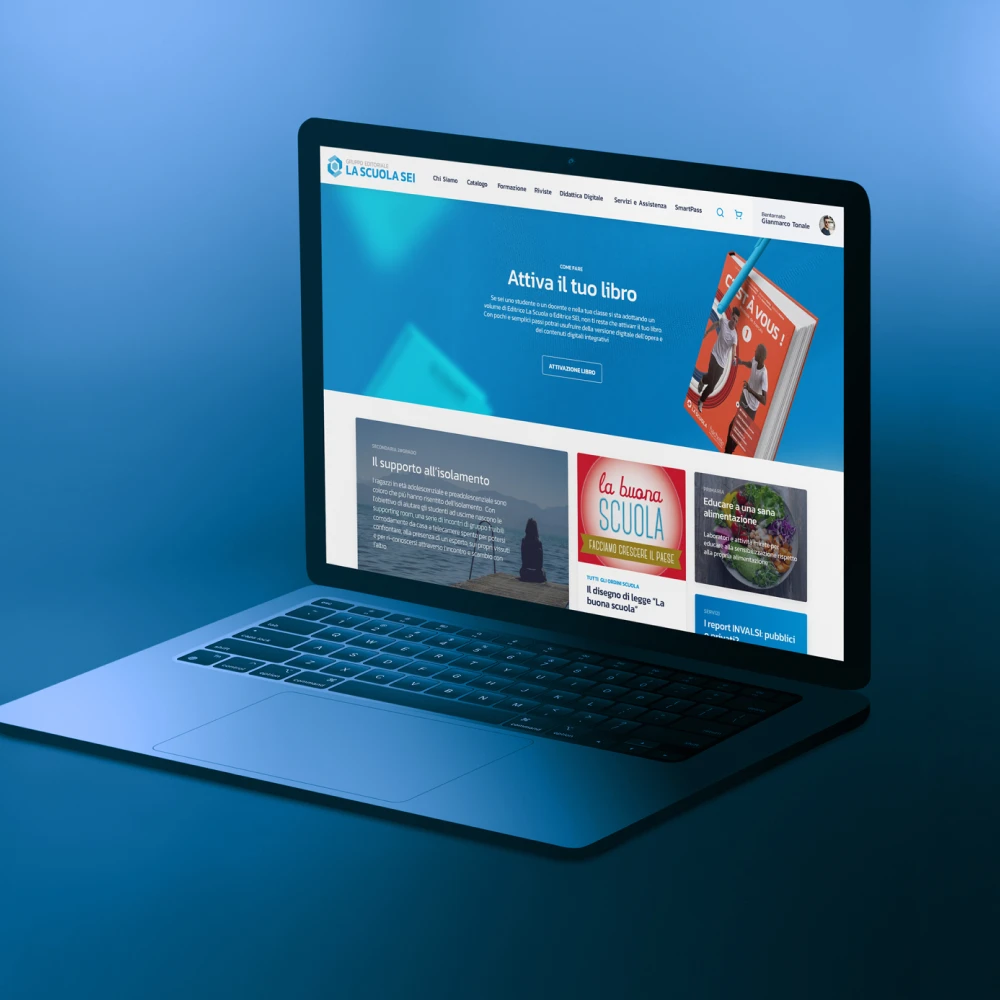
No legacy to drag along: the platform, the design system and the accessibility baseline are born together, from day one. La Scuola SEI built its new digital identity this way: editorial platform, design and infrastructure in one end-to-end project.
A single Drupal platform at the center, connected to the systems you already use and released on cloud native infrastructure.
Monolithic or decoupled, depending on what you need: Twig when the website is the destination, headless when the same content also has to reach apps, kiosks, e-paper or other channels. API-first, JSON:API and GraphQL, content model held in version-controlled configuration.
CRM, ERP, PIM, DAM, marketing automation, e-commerce, payment gateways. At Caleffi the PIM is the single source of product data and Drupal exposes and enriches it with editorial content, and the site keeps working even when the link goes down.
Containers, Kubernetes, CI/CD on GitLab, development, test and production environments, observability and repeatable releases. On whichever cloud suits you: GCP, AWS or Alibaba Cloud, as for Caleffi China, where the local choice produced a 196% performance improvement.
The Drupal project’s AI modules with guardrails on agent actions, an MCP client, RAG with vector search, translation providers. These are public modules we maintain on drupal.org.
Every promise has public proof.
Accessibility and security are how the platform is set up on day one, and whoever audits you can verify them.
No license to pay: the budget goes on what you build, and the code stays yours.


A content platform is judged after go-live: publishing time, volumes, countries and languages, speed for the reader. These are the figures of the clients who adopted it.
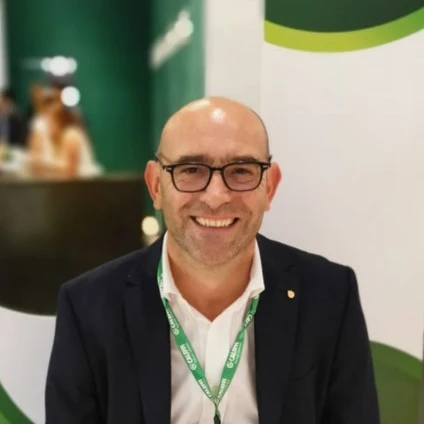
The PIM plus CMS combination lets us centralize and maintain all product information in real time, making the most of an enormous body of documentation, all of it available to every one of our offices around the world to manage on their own.
 University
−70% in content publishing time
 Manufacturing
30 countries and about twenty languages on one platform

 Publishing and public sector
Before we propose a platform we want to understand what you publish, how much of it, in how many languages, with how many people and under what constraints. After the first step you already know whether we are the right people.
We look at the platform you have: sites, languages, content, integrations, who publishes and who approves. We check the accessibility and security level you are starting from.
You leave withA picture and a phased roadmap, useful even if you then choose somebody else.
We build the platform, the content model and the design system foundations, migrate the content and train the editorial team.
You leave withThe first site live, with your editors working inside it.
New sites, new languages, new integrations, AI features, updates and security, on a roadmap reviewed at agreed intervals.
You leave withA platform that grows with you, year after year, release after release.
We show you how an editorial team composes, translates and publishes, and what it would look like with your sites.
A solution is made of our services, put together for one precise problem.
The questions you are already asking.
A content management platform, open source, covering the technical core, the design system foundations, editorial training, an accessibility and security baseline, and running the platform over time. The Discovery sets the scope, with what is included and what is optional.
Yes. We develop the platform with specifications written with you, tests and review on every change, and a person on the team who approves every release. In the editor AI proposes and the editorial team decides, with a record of who approved. Code, configuration and content stay yours and exportable.
We do not publish a price list, because the cost depends on how many sites, how many languages, how much content there is to migrate and how many integrations are needed. The difference from a licensed CMS is structural: there is no annual fee for the right to use the software. The Discovery gives you a phased roadmap with an order of magnitude for each phase.
Yes, for everything that is composing content: new pages, landing pages, campaigns, translations, updates. Developers come in for a new component or a new integration: your editors only wait when the platform itself has to be extended.
Yes, and it is the most common starting point. We start with a content inventory, decide what to migrate and what to archive, map URLs and redirects so rankings survive, then migrate in batches with verification. FiscoOggi migrated more than 42,000 items of content, 35,000 images and 2,700 media files with almost 600 authors at work.
Yes, it is built on Drupal. “Drupal CMS” is the Drupal project’s ready-to-use distribution, with a guided installation and preconfigured setups; Drupal is the platform underneath. We start from one or the other depending on the project: Drupal CMS shortens the start, Drupal gives more room when the content model is complex.
The stated starting point is WCAG 2.2 AA and EN 301 549: components are born accessible, so the level holds even when the person publishing has never read the guidelines. Delivery happens inside a perimeter certified to ISO/IEC 27001:2022, 27017:2015 and 27018:2025, with dated, downloadable certificates. On GDPR, NIS2 and DORA we have a dedicated guide for regulated sectors.
No. The AI suggests and a person approves, and the record shows who approved. Technically this means putting guardrails on agent actions: we maintain the guardrails module and the MCP client these projects run on, so we wrote the point where automation stops ourselves.
Through documented APIs, in both directions. The most common case is a PIM as the single source of product data: the CMS reads it, enriches it with editorial content and keeps serving pages even if the link goes down. The same applies to CRM, ERP, marketing automation, e-commerce and payment gateways.
We do, if you want: cloud native hosting, monitoring, updates, security and an agreed roadmap. Or your own team, with the documentation and the training. The code is open source, so the choice stays yours afterwards too. We have worked with Caleffi since 2013, and its previous site lasted ten years: that is the horizon we plan on.
It depends on how many channels you have to serve. If the website is the destination, a traditional architecture is simpler to run and faster to evolve. If the same content also has to reach apps, kiosks, e-paper or other front ends, decoupled makes sense. The platform supports both, so the choice stays open.
Because we build the platform ourselves. The founders have contributed to the open source project since 2008, SparkFabrik since 2015; we maintain public modules on drupal.org, and in May 2026 we became the first Drupal Certified Partner Gold in Italy. In practice that means direct access to the people who maintain the critical modules when something breaks, and first-hand knowledge of the roadmap, because we take part in the discussions where it is decided.
Bring your sites, your languages and whatever costs your team the most time. We will tell you whether this is the right path for your editors, including when the answer is no.
Tell us about your projectUpdated
Services
Resources