






AI Knowledge Platform to query your company’s documents
People ask in natural language and get answers from the company’s documents, with the source cited. Every business unit has its own rules.
Generic AI knows nothing about your company. And nobody governs it.
The AI Knowledge Platform is a company knowledge base with an AI assistant: it answers from internal documents and keeps the data, rules and costs of each business unit separate. SparkFabrik is an AI Native Engineering company that designs and runs AI assistants with guardrails for clients such as Luiss.
The knowledge is already there: manuals, data sheets, procedures, website pages, the documents of every business unit. But the people working on site, at the counter, in the classroom or on the phone have no time to look for it, and the questions always end up with the same experts.
Meanwhile every department tries its own AI tool: data leaving with no rules, costs nobody sees, invented answers that look true.
One platform to bring AI to company knowledge, business unit by business unit, with clear rules, costs and responsibilities.
Answers you can check
Every answerhas its source.
Every answer cites the document and the page, with a link to the original. If the information is not in the documents, it says so and points to the right person.
Technical assistant · official documentationInteractive example · sample documents
How do I clear alarm E04 after replacing the probe?
Switch the power off for at least 30 seconds, then hold the reset button until the display flashes. If the alarm comes back, check the probe wiring. [1]
1Installation manualp. 42, “Alarms and reset”Open the passage ↗
E04 · Probe faulty or disconnected. After replacing it, switch the power off for at least 30 seconds, then hold RESET until the display flashes. If the alarm persists, check the wiring (p. 43).
Try a question
On the platform you type any question; here the questions are samples.
Governance by business unit
Every department,its own rules and budget.
Every business unit is a tenant: it decides what goes into its knowledge base, which model to use and who can access it. Requests, tokens and cost are visible per tenant, with an automatic alert at 80%.
Back office · business unitsInteractive example · sample data
| Business unit | Model | Monthly budget | Budget used |
|---|---|---|---|
| Supportmanuals, data sheets, FAQ | 64% | ||
| Salesprice lists, catalogues | 41% | ||
| Productionprocedures, safety | 22% |
Cost follows the model chosen for each department. At 80% of the budget an alert goes out.
Inference in the EUPersonal data masked in logsPrompts with history
Extraction and indexing
The documents you havebecome knowledge.
PDF, images, Word, Excel, PowerPoint and web pages, uploaded by each team on its own, with a reference to the source page.
Knowledge base · SupportInteractive example · sample documents
PDFInstallation manualUploaded by the Support teamIndexed
WEBWebsite product pagesUpdated when they changeIndexed
p. 42 · Alarms and resetp. 43 · Probesproduct page · Valves
The situations people start from.
You start from one concrete use case, then the same platform serves the other departments: sales, support, production, finance.
Agents, installers and technicians keep calling the technical office
Answers come from the official documentation, even on the phone, with the link to the document and the page. The experts are left with the new cases.


Every business unit has different documents, rules and budgets
Every business unit is a tenant: it decides what goes into its own knowledge base, which model to use, with which prompt and who can access it.


Every department uses a different AI tool, with no common rules
A single access point to the models, with guardrails, spending caps and metrics per business unit. IT sets the rules, departments get on with their work.


We are afraid model costs will get out of hand
Requests, tokens and cost are visible per tenant. The budget is daily, weekly or monthly, with an automatic alert at 80%.


We cannot send our data just anywhere
Services and inference in European Union regions, personal data masked in the logs, GDPR roles written into the contract.


The public website has to answer students, customers or citizens
The interface is an accessible web component: it goes into the website, the intranet or the e-learning platform, with anonymous access or through company SSO.


How it works.
Five components developed by SparkFabrik on open source technologies, installed on cloud native infrastructure in the European Union.
- Interface
Conversational widget
Streaming chat as an accessible web component, with cited sources and a link to the original document. Anonymous access or through SSO, OIDC or SAML.
- Governance
Multi-tenant back office
On Drupal: tenants, content to index, prompts with history and rollback, a model per tenant, metrics and feedback.
- Engine
Agentic AI Gateway
It decides whether to query the knowledge base, retrieves the context with RAG and builds the answer. If the sources are not enough, it points to the right contact.
- Control
Proxy to the models
A single gateway to the model providers: spending caps and rate limits per tenant, guardrails, consumption metrics.
- Knowledge
Extraction and indexing
PDF, images, Word, Excel, PowerPoint and web pages, uploaded by every team on its own, with the reference to the source page.
- Drupal
- Go
- Svelte
- LiteLLM
- Typesense
- Firestore
- Kubernetes
- Infrastructure as Code
- Gemini, Claude, OpenAI, Mistral
A platform, not a chatbot.
These points set a demo apart from a system the company uses every day.
No lock-in, not even on the model
Open source components and a single proxy to the models: the model is chosen per tenant and changed from the interface.
- Gemini, Claude, OpenAI, Mistral or hosted models, depending on the use case.
- Code and configuration under version control, infrastructure as code.
Inside a clear perimeter
The system answers only from the indexed content, with guardrails against harmful content and manipulation.
- Inference in the EU, consistent with the AI Act.
- De-identified logs and written GDPR roles: the client is the controller, we are the processor.
- Certified processes ISO/IEC 27001, 27017 and 27018.
From the first use case to the whole company
You start from one department and a defined goal. The others join on the same platform, with the same rules.
- Sales, support, production, finance: one tenant each.
- Evolution: technical drawings and images, then the unwritten know-how of the experts, by voice too.
In production.
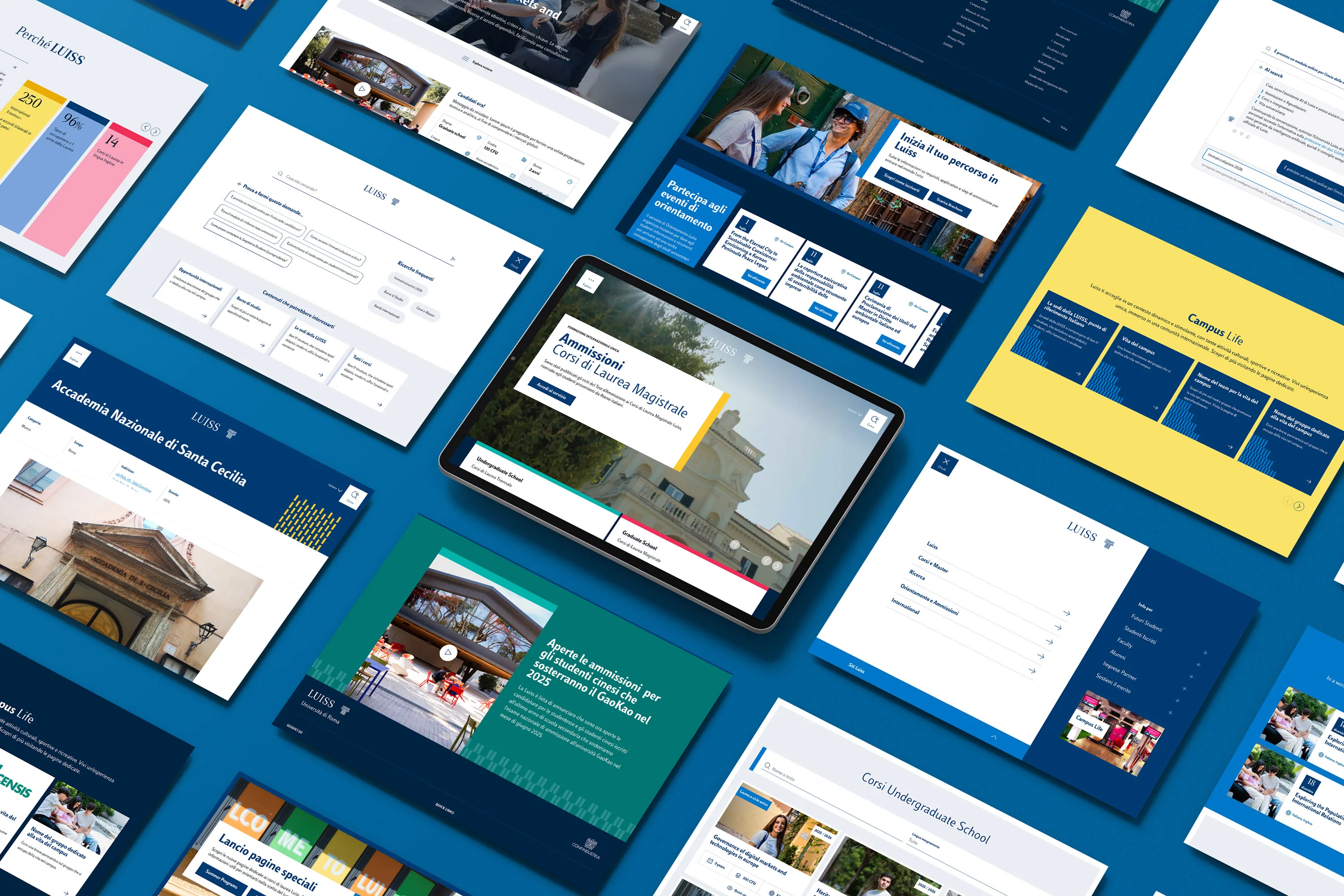
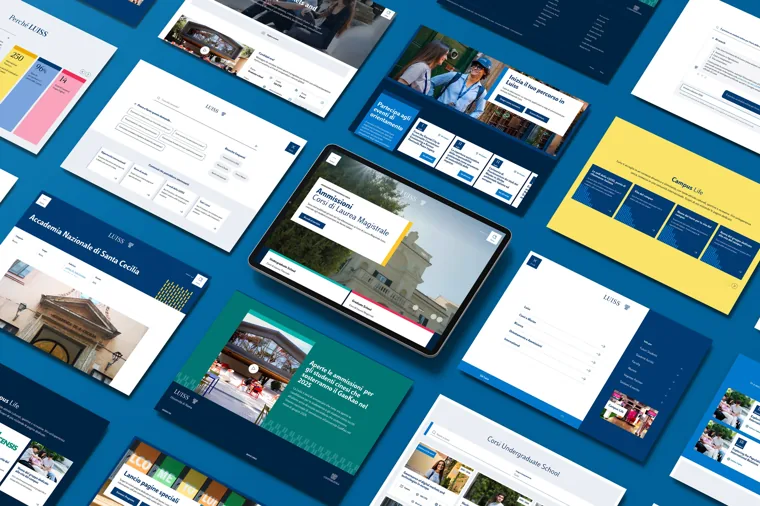
The same components run Luiss’s chatbot with guardrails and its conversational search.
Luiss
A chatbot with safe, controlled answers thanks to AI Guardrails, a conversational engine and agents, search anchored to the university’s content.University
Open source
AI Guardrails, MCP Client and the Typesense RAG recipe are Drupal modules we maintain.Drupal AI Initiative
Guide
The AI agents transforming business processes: architectures, use cases, governance.WhitepaperThe platform is in production or on its way at other companies, manufacturers included. We will name them when they are public.
What is always included.
Everything else gets decided together.
The platform
Five components
Widget, multi-tenant back office, AI Gateway, proxy to the models, indexing, on your cloud infrastructure or run by us.
- Agreed tenants
- Guardrails
- Source citation
- Metrics
- Budget
- Feedback
- Logs
- More tenants
- More models
- CRM integrations
- Ticketing or ERP
The knowledge
Your documents, indexed
Extraction tuned on the document templates you point us to, indexing for RAG.
- The first indexing and the tuning on the agreed templates
- New templates
- Periodic re-indexing
The tuning
Answers tested with users
Testing, user acceptance and tuning of the answers before go-live.
Running it
After the release
Hosting, security, observability and platform updates.
First a use case with a clear perimeter.
Then the platform grows, department after department.
- 01
Text documentation
PDF, Word and web pages become a queryable knowledge base, with source citation and the original document one click away.
You leave withThe platform live for the first department.
- 02
Visual technical content
Images, technical drawings and diagrams enter the knowledge base.
You leave withAnswers that also use what today only exists as a drawing.
- 03
Unwritten knowledge
The technical know-how that is not documented today: the expert explains, the system learns. By voice too.
You leave withThe experts’ know-how, available to everyone.
How you pay.
Project build
Analysis, implementation, integrations, indexing, testing and warranty.
Running fee
Platform, hosting, security and observability.
Model cost
You pay for what you use, visible per tenant and with a cap.
The phases of the first project.
- Phase 1Detailed requirements
- Phase 2Cloud infrastructure as code
- Phase 3Document collection and indexing
- Phase 4Development
- Phase 5Testing, acceptance and tuning
- Phase 6Go-live
Watch it answer from your documents.
Bring us a handful of real documents and the questions you get most often. In a demo you see how it answers, with which sources, and what it says when it does not know.
The services inside this solution.
A solution is made of our services, put together for one precise problem.
AI Development
The engine: RAG, agents, guardrails, integration with the models.MCP servers
To connect the platform to other company systems as tools, with permissions and audit.Drupal
The multi-tenant back office, with roles and approval workflows.Managed Services
Running, updates and security of the platform after the release.Kubernetes consulting
The cloud native infrastructure it runs on.
Your data stays where you decide.
Your documents stay within the perimeter you set: inference in European Union regions, and the AI Guardrails we maintain between the data and the model.
Frequently asked questions.
The questions you are already asking.
How is it different from a chatbot?
A chatbot is an interface. The AI Knowledge Platform is the system behind it: a knowledge base per business unit, model governance, budgets, guardrails, metrics and logs. The assistant is one of the ways to use it.
Do you use AI on our projects? With what guarantees?
Yes. We build the platform with the same method as all our projects: specification, tests and review, and a person who approves every release. Inference in European Union regions, guardrails between the documents and the model, and a model you change from the interface: data stays within the perimeter you set.
Does it make answers up?
No. It answers only with the context retrieved from the indexed content, citing document and page. If the information is not there, it gives a courtesy answer that points to the right contact.
Which documents can it use?
PDF, images, Word documents, Excel sheets, PowerPoint presentations and web pages. Extraction is tuned on the most used document templates.
Which model do you use?
The right one for the use case, for example Gemini, Claude, OpenAI or Mistral. Every business unit can have its own, and you can switch between the configured models from the interface.
Where does the data live?
Services and inference in European Union regions, consistent with the AI Act. The client remains the data controller, SparkFabrik is the data processor under the GDPR.
Does it connect to our company login?
Yes. For every tenant you choose anonymous or authenticated access, through the company Identity Provider with the OIDC or SAML standards.
What does it cost?
We do not publish a price list. The offer always keeps three items separate: the one-off build, the running fee and the pay-per-use model cost, with a budget per tenant.
How long does it take?
It depends on the documents and integrations you start from. The duration is defined at the end of phase 1, with the detailed requirements; every later phase ends with a release you can check, up to go-live.
Talk to the CEO or the CTO.
Tell us which business units, which documents and which constraints you have. We will tell you which use case we would start from.
Tell us about your project

Updated