









Cloud migration to AWS, Google Cloud and Azure
We plan and run the migration in three phases (assess, plan, migrate), Alibaba Cloud included. The infrastructure is in Terraform and every artifact stays yours.
Every workload has its own strategy: lift-and-shift, hybrid or cloud native.
A cloud migration moves applications, data and infrastructure to AWS, Google Cloud or Azure. SparkFabrik is an AI Native Engineering company that has moved the platforms of clients such as Caleffi and Il Giornale to the cloud.
The plan starts from the workloads, not from the provider. For each workload we assess its cloud readiness, the costs across providers and the TCO. That gives the plan: what moves as it is and what is redesigned for the cloud.
Results
What changes for your team
A plan for every workload
You know what moves as it is, what is redesigned for the cloud, and in which order.
Costs compared before you choose
Pricing calculators across providers and a TCO comparison, before you commit to one.
Infrastructure that stays yours
Terraform code, Packer images and every other artifact stay in your repository.
Assessment, multi-cloud, IaC and management after the migration.
From the first assessment to ongoing management.
Strategic evaluation and planning
Assessment & Planning
Technical and business assessment of every workload, with pricing calculators across providers and a TCO comparison.
Multi-vendor and hybrid strategiesSee also: Kubernetes consulting
Multi-Cloud & Hybrid
Migrations to AWS, Google Cloud, Azure and Alibaba Cloud, including multi-cloud and hybrid, with portable architectures on Kubernetes.
Declarative and reproducible infrastructureSee also: DevOps and Platform Engineering
Infrastructure as Code
All the infrastructure in Terraform and Helm: reproducible, versioned and auditable environments that remain your property.
Continuous optimization after migrationSee also: Managed Services
Post-Migration Management
After the migration: monitoring, patching, performance and cost optimization. It can become a Managed Services contract.
Beyond lift-and-shiftSee also: the Cloud Native Journey
Cloud Native Journey
Containers, microservices and supply chain security: the phased program that brings your team to cloud native.
Success Stories
Cloud migrations for our clients.
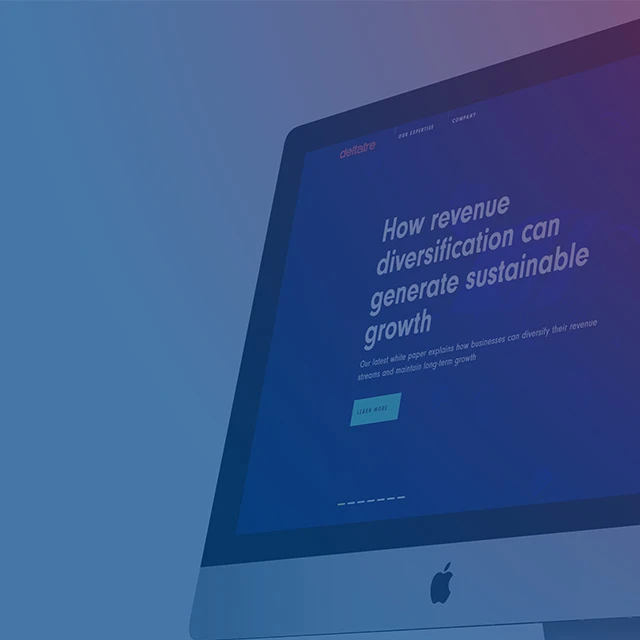
 Sport and media
Deltatre brings its teams to cloud native: infrastructure as code, GitOps and local environments aligned with the pipelines.
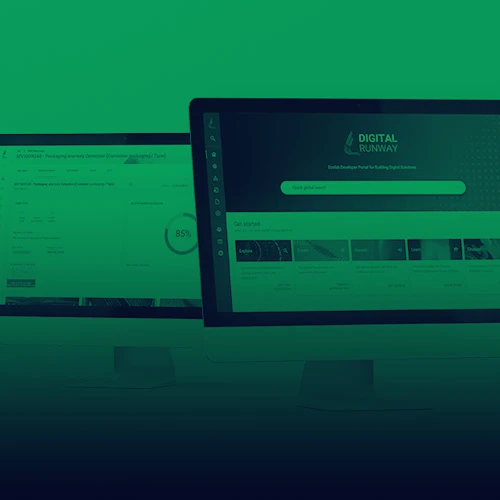
 Manufacturing
Ecolab gives its developers Digital Runway, an Internal Developer Platform.

Kubernetes Certified Service ProviderCloud Native Computing Foundation 
CNCF memberCloud Native Computing Foundation 
OpenSSF memberOpen Source Security Foundation 
ISO/IEC 27001, 27017, 27018Information security
Assess, Plan, Migrate.
From the initial assessment to management after the migration.
- 01
Assess
Readiness assessment, pricing calculators and a TCO comparison for every component.
- 02
Plan
For each workload we choose with you lift-and-shift, hybrid or cloud native, and the order of migration.
- 03
Migrate
Incremental migration with Infrastructure as Code (Terraform), to ensure continuity and reduce risks.
Resources
Further reading

Whitepaper · PDF
IT Solutions for Cloud Transformation
Tools and methods for a digital transformation that starts from the cloud.
Download the guideFrequently asked questions.
About cloud migration.
Do you use AI on our projects? With what guarantees?
Yes. AI helps us analyze workloads and dependencies, but we decide the strategy for each workload with you. The infrastructure becomes code in your repository, every change goes through tests and pipeline checks, and a person on the team approves every step into production.
Which cloud providers do you support?
- AWS: migration to EC2, EKS, RDS, S3 and the other AWS services
- Google Cloud Platform: GKE, Cloud Run, Cloud SQL, BigQuery
- Microsoft Azure: AKS, Azure Functions, Azure SQL
- Alibaba Cloud: solutions for Chinese and Asian markets
We also support multi-cloud and hybrid strategies.
How long does a cloud migration take?
Timelines depend on the number of workloads, the strategy chosen for each one (lift & shift, refactoring or cloud native redesign) and the dependencies between systems. We discuss it in a first conversation, with no commitment.
We use an incremental approach that minimizes risks and ensures operational continuity.
What’s the difference between Lift & Shift and Cloud Native?
The two strategies have different objectives:
- Lift & Shift: a move with minimal changes, the fastest way to leave the data center
- Cloud Native: redesign to fully leverage cloud services (containers, serverless, managed services)
We often recommend a phased approach: initial Lift & Shift followed by progressive modernization through the Cloud Native Journey.
How do you ensure operational continuity during migration?
- Incremental migration: one workload at a time
- Blue-green deployment: switch without downtime
- Rollback plan: ability to revert
- Thorough testing: pre-cutover validation
- Agreed maintenance windows: for critical transitions

Talk to the CEO or the CTO.
Tell us which workloads you want to move and to which cloud. We will tell you which one we would start with.
Tell us about your project

Updated