






AI agents and assistants inside the systems you already have
Search, assistants and agents connected to your documents and applications, with guardrails and permissions. We design and run them, and a person always has the final say.
On its own, a model knows neither your data nor your rules.
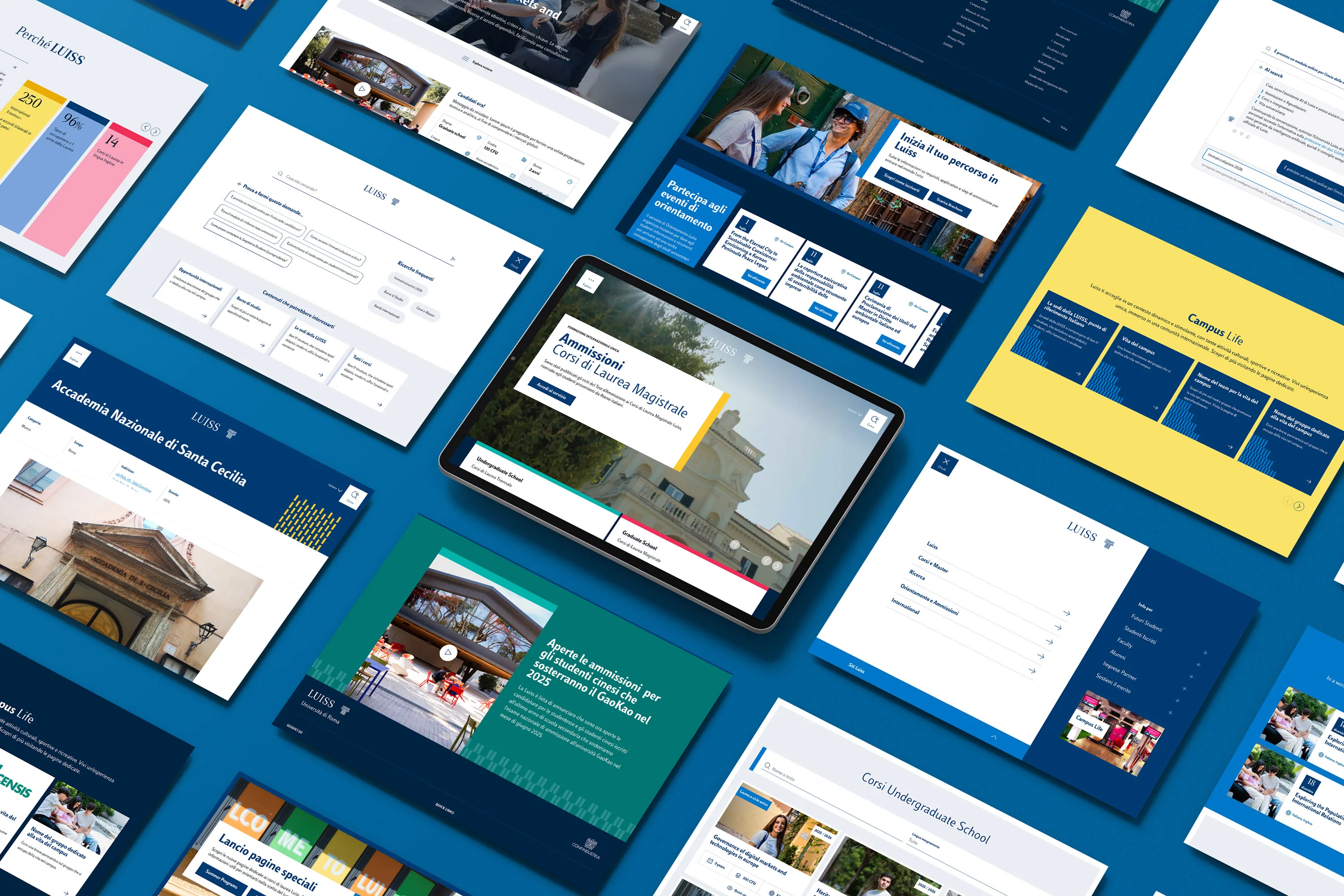
Integrating AI into a company means connecting models and agents to the documents, data and applications you use every day, and deciding what they can read, what they can do and who approves. SparkFabrik is an AI Native Engineering company that designs and runs search, assistants and agents for organisations such as Luiss, with guardrails, permissions and a person who has the final say.
That is why we start from the platforms we know best: the ones we design and run.
What we do, and where to check it.
We use open source components. The model is chosen for privacy and cost and can be replaced; data and inference stay in the EU when needed.
AI in the CMS, with the final say left to the editor who publishes.
We bring AI into Drupal with the guardrails we wrote and contributed, starting from our multisite and multilingual CMS solution.
Success story The Luiss case study
Search and assistants, with the source of every answer.
Semantic search answers with the passage from the page, and the AI Knowledge Platform cites the document and page of your internal files.
Open source Search API Typesense on drupal.org
Agents connected to your systems through MCP, with every call traced.
We enable each tool one by one, and actions that change data need a person’s approval: here is how we connect agents.
Open source The MCP Client module on drupal.org
AI in the way your team builds software, with written rules.
We bring the method into your team and onto your code with the AI Native Journey.
Public method The Playbook: our rules for working with AI
Agents, connected to your systems.
An agent is worth the access you give it. We design and run MCP servers and clients like any software in production: contracts, tests, permissions and logs.
How to start.
Each step tells you whether to take the next one.
We start from your process
A workshop on your processes, data and constraints. You leave with the use cases ranked by value and feasibility, and with the one to start from.
Testing it on your data
The chosen use case, on a sample of your data, with the measures agreed beforehand. It is there to decide whether to go ahead.
In production, for a first group
The system inside your tools, with access control, guardrails, monitored costs and a person who approves every action that changes data.
For everyone, and for other use cases
More users, more sources, other processes. On the same infrastructure and with the same rules. After release we run the agents with AgentOps: evaluations, costs, incidents and an audit log.



You know what will be built, and who answers for it.
In the systems we build a person has the last word: at Luiss, every translation from the AI engine goes through the publisher.
Success story The Luiss case study
The method: AI Native EngineeringYou can check the work we have already published.
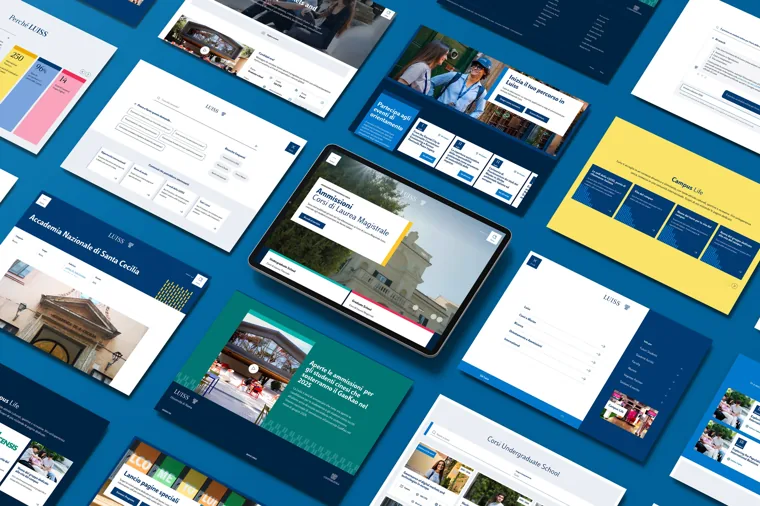
Luiss
Conversational search anchored to the university’s content, a chatbot with guardrails and AI-assisted translations with human review.University · In production
Guide
AI agents that transform business processes: what they are, where they help, how they are put into operation.White paper


Drupal AI
AI modules for Drupal that we maintain or contribute to on drupal.org: AI Guardrails, MCP Client, the Typesense RAG recipe and Search API Typesense.Open sourceFrequently asked questions.
About AI development.
Who develops AI solutions in Europe?
SparkFabrik develops enterprise AI solutions for Italian and European organizations: assistants with RAG, semantic search, agents connected to company systems through MCP and AI in Drupal CMSs. We integrate models from OpenAI, Google, Anthropic and open source into our clients’ web and mobile applications. We start from the highest-impact use cases and measure the results before extending.
What is RAG and why is it important for companies?
RAG (Retrieval Augmented Generation) connects a language model to the company’s knowledge base. The model answers from internal documents and data, cites its sources and makes up fewer answers, while the data stays under your control. It serves internal assistants, customer support and knowledge management, as in our AI Knowledge Platform.
Do you use AI on our projects? With what guarantees?
Yes, and in the AI systems we build a person has the last word. Actions that write or delete wait for their confirmation; inputs and outputs go through guardrails. The model is chosen per use case, for privacy and cost, and can be changed. At Luiss, the publisher approves every translation from the AI engine.
Which LLMs and technologies do you use?
The model is chosen for each use case, for privacy and cost, and can be changed. We work with OpenAI and Azure OpenAI, Google Vertex AI and Gemini, Anthropic Claude, Amazon Bedrock and open source models such as Llama and Mistral, with a single proxy (LiteLLM) in front of the models. For orchestration and search we use LangChain, LlamaIndex, Typesense, pgvector, Qdrant, Pinecone and Weaviate, plus the Drupal AI modules.
How do you ensure security and privacy?
We assess privacy risks before development. Then we apply guardrails on input and output, anonymize or mask personal data, set per-user permissions and trace every call. Services and inference can stay in the EU, on-premises or in a private cloud. We help you comply with the GDPR and the EU AI Act, and our processes are certified to ISO/IEC 27001, 27017 and 27018.
How much does an AI solution cost?
It depends on use cases, volumes, integrations and requirements. The initial workshop gives the order of magnitude. In our solutions we always keep build, operation and model consumption separate.
What is MCP?
The Model Context Protocol is an open standard that defines how an AI application accesses external tools, data and prompts. An MCP server exposes the functions of a system in a format that any compatible client can use. Anthropic introduced it in 2024, and today it is governed by the Linux Foundation’s Agentic AI Foundation.
How is it different from an API?
An MCP server usually builds on the APIs you already have. It adds descriptions written for models, a perimeter of enabled tools, authentication and call tracing. The APIs remain the foundation.
Talk to the CEO or the CTO.
Tell us the documents, requests or content you want to start from, and the systems involved. We will tell you which use case we would start from.
Tell us about your project

Updated