Evaluation report
Results on the test cases, comparison with the month before, questions left unanswered.
We run AI assistants and agents in production. Each one has a person accountable for it, is evaluated before every release and leaves an audit-ready record.
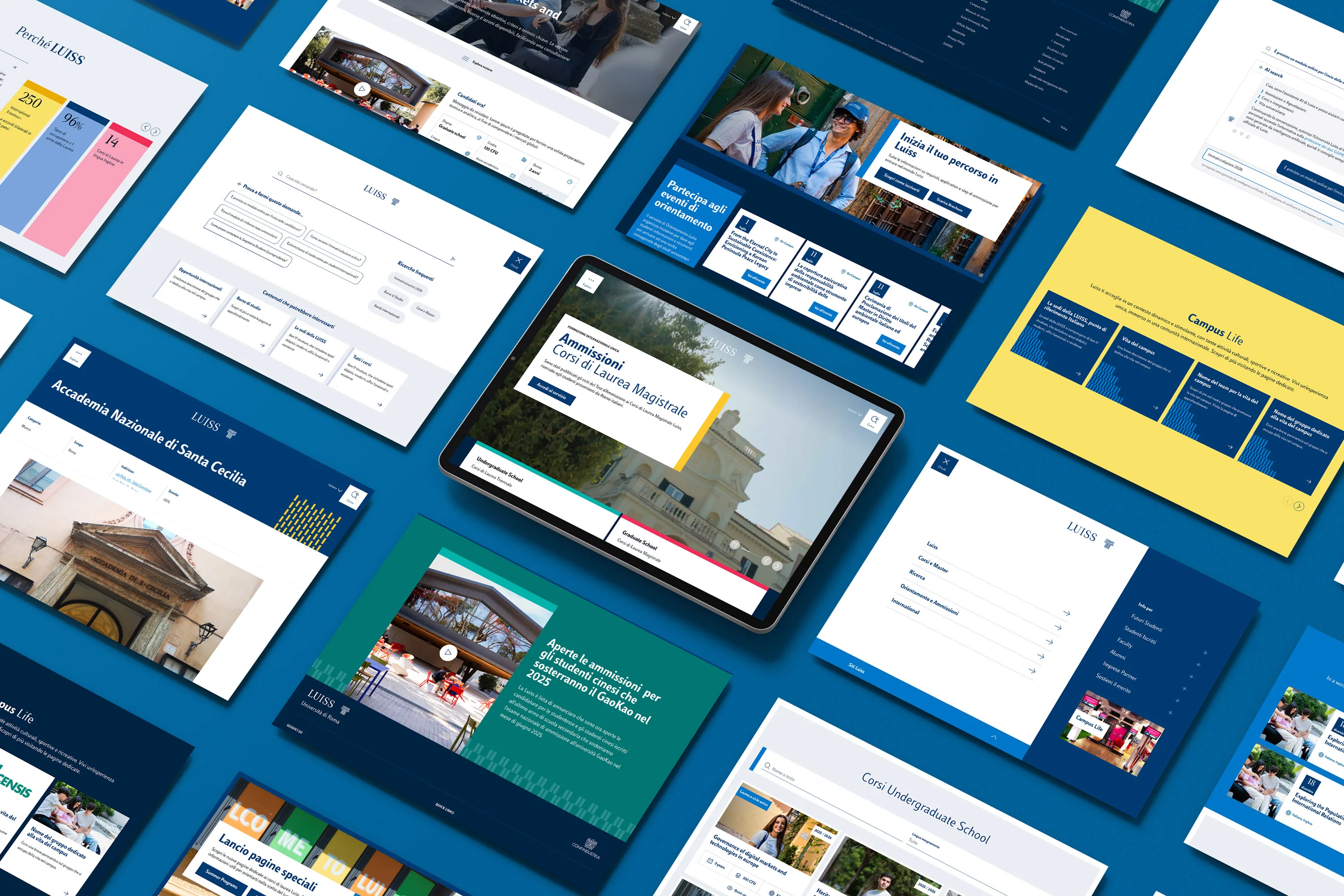
AgentOps is the operation of AI assistants and agents in production: evaluations, costs, permissions, monitoring and incidents, handled as for any other software. SparkFabrik is an AI Native Engineering company that designs and runs the conversational search and AI assistants of clients such as Luiss.
In a demo an assistant works. In operation its behaviour changes when the model, the documents or the questions change, and without repeated evaluations nobody notices.
Meanwhile costs grow department by department and the actions of agents leave no trace. When an agent gets it wrong, it is not clear who should step in.
So we run every agent as software in operation: a spec, tests, a record and a person accountable for it.
For each agent we tell you what is always included and what you add when you need it.
Replaceable
The model is chosen for privacy and cost. Every change, even when the provider forces it, goes through the same evaluation.
Per department and per agent
A single proxy to the model providers, with budgets and spending caps.
Who decides what
A written spec with the agent’s owner: what it reads, what it does, who approves.
Repeated evaluations
Cases taken from real questions, with the expected answers, run before every release.
Observability and incidents
Every call traced, with sources, tools, model, cost and timing.
Audit-ready record
Versions, evaluations and approvals, with de-identified logs.
It applies to every change: a new prompt, a new tool, a new model. What we learn in operation goes back into the spec.
Together we write what the agent must do, with which data and which actions. The approved spec lives in your repository.
We build the test cases from real questions and set the thresholds. A version that does not meet them goes no further.
The lead engineer approves the release and keeps the previous version ready. Every step stays in the record.
We trace every call. Alerts, incidents and costs over budget reach the team, which steps in and writes down the cause and the fix.
Agents follow the rule we use for code: first the approved spec, then the release, with a person accountable for it.
We go through it with the agent’s owner in the monthly review, where we decide what to improve. The documents stay with you.
Results on the test cases, comparison with the month before, questions left unanswered.
Model usage against the budget, with the anomalies explained.
What happened, who was involved, the cause and the fix.
Versions, approvals and de-identified logs, ready for an internal audit or a regulator’s review.
AgentOps brings together in one service the work we already do on AI systems and on our clients’ platforms.
Conversational search over the university’s content, a chatbot with guardrails and assisted translations: every translation is approved by whoever publishes it.
Success story The Luiss case study
In the AI Knowledge Platform every business unit has its own model, permissions and budget, with an automatic alert at 80%.
Solution AI Knowledge Platform
We wrote the guardrails for Drupal AI and donated them; the MCP Client module enables tools one by one.
Open source AI Guardrails on drupal.org
The Cloud DevOps Platform brings pipelines, observability and governance to our clients’ Kubernetes environments.
Service Managed Services


Or from the one you want to put into operation. Prices and timing are in the written proposal.
You tell us about the agents you have, the systems they touch and the constraints of your industry.
You leave withYou know whether it makes sense to start, and with which agent.
Proxy, evaluations, traces and an audit log on the first agents, then the monthly review.
You leave withThe first monthly report.
Inventory of the agents, proxy to the models, test cases, tracing and an audit log.
Evaluations, observability, incidents, model changes and reports.
You pay for what you use, visible per department and with a cap.
About AgentOps.
SparkFabrik, with its AgentOps service. For every agent it writes the spec with your owner and evaluates the agent before every release. It traces every call and keeps an audit-ready record for the AI Act and DORA; every month the owner gets evaluations, costs and incidents in writing. SparkFabrik already runs the conversational search and AI assistants of Luiss, and maintains the AI Guardrails and MCP Client modules on drupal.org.
SparkFabrik builds them with AI Development and runs them with AgentOps. It connects agents to your systems through MCP servers on top of the APIs you already have: each tool is enabled one by one, and actions that change data wait for a person to confirm them. From the first release, every agent has a spec, tests and a record.
LLMOps deals with the models: training, fine-tuning and deployment. AgentOps governs the agent as a whole: the tools it uses, its memory, the actions it plans and the systems it touches. In our service the model is a part you can replace, and every change goes through the same evaluation.
Every agent has two people accountable for it. Your owner decides what the agent may do; our lead engineer is accountable for releases, operation and incidents. Actions that write or delete wait for a person to confirm them, and every error becomes an incident with its cause and fix.
OpenAI and Azure OpenAI, Google Gemini on Vertex AI, Anthropic Claude, Amazon Bedrock and open source models such as Llama and Mistral. A single proxy (LiteLLM) sits in front of the models. The model is chosen for privacy and cost, and every change goes through the same evaluation.
Where you decide: services and inference in European Union regions, on-premises or in a private cloud. Logs are de-identified and the GDPR roles are written in the contract: you are the controller, we are the processor. Our processes are certified ISO/IEC 27001, 27017 and 27018.
The number of agents, the systems they touch and the constraints of your industry, which we go through together in the first call. Setup is paid once, operation with a monthly fee and the models per use, with a cap per department.
Yes: it helps us read traces and evaluations and prepare the reports. Every change to a spec, prompt or configuration goes through the test cases in the pipeline, and a person on the team approves it. The model is chosen for privacy and cost, and the data stays where you decided.
Tell us which agents you already run, or which one you want to put into operation. We will tell you where we would start.
Tell us about your projectUpdated
Services
Resources