


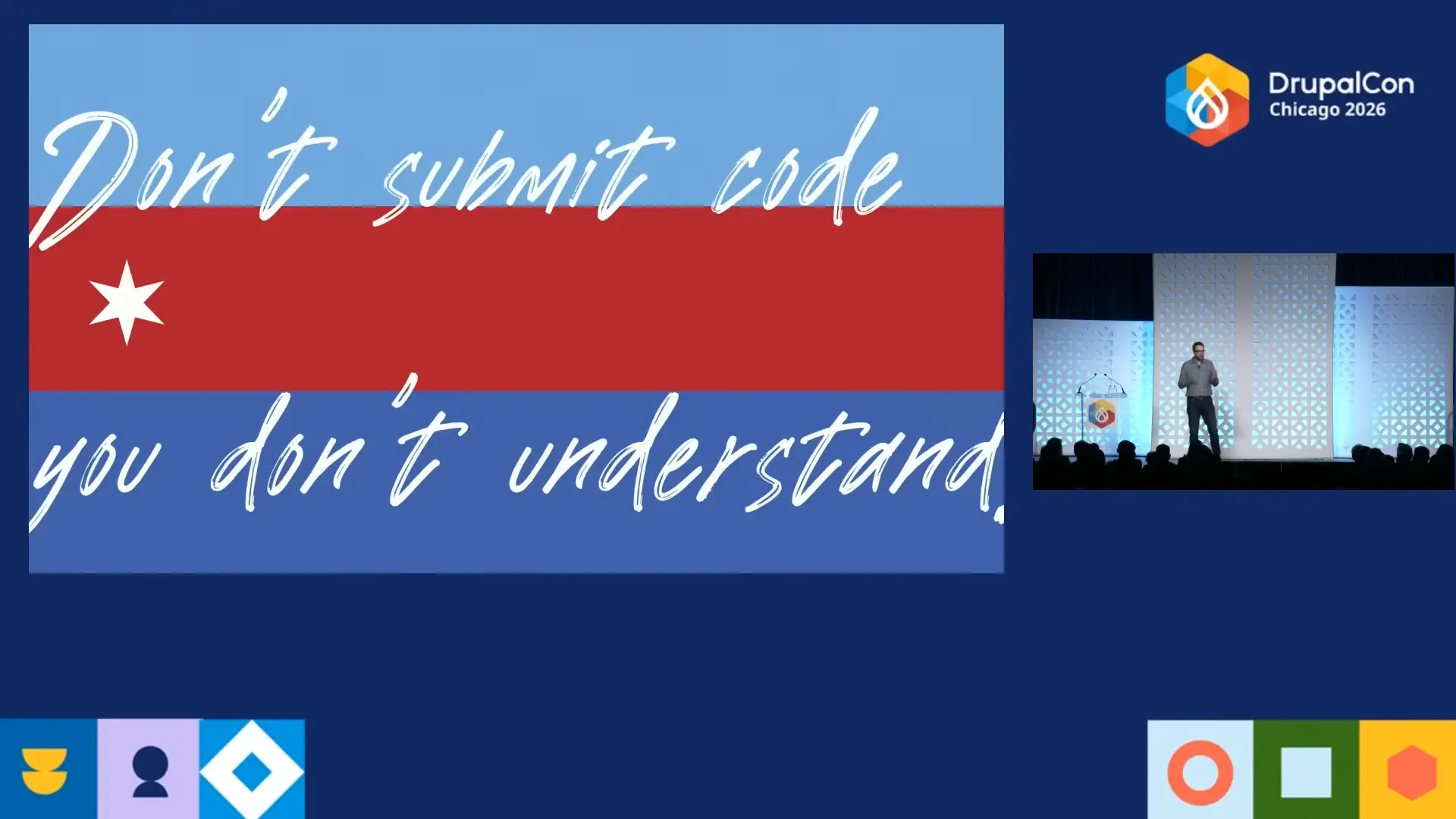
Artificial intelligence has transformed coding into a commodity: this is the inescapable truth for CTOs. And it is the central point of Dries Buytaert’s keynote at DrupalCon Chicago 2026, during the event celebrating 25 years of the Drupal open-source project. Source code is literally becoming a disposable resource. The true value of software development is rapidly shifting from mere coding to the rigorous definition of specifications and system architecture design. The result? A massive shift from manual programming to the orchestration of autonomous agents.
The observations that emerged perfectly reflect a core principle of the SparkFabrik Playbook. Ephemeral code frees up resources, but artificial intelligence does not replace software engineering; it exposes it ruthlessly. If a company has a clear vision and solid requirements, AI multiplies operational efficiency; in the absence of strategic direction, it merely amplifies errors on a large scale.
In this scenario, our Drupal development and consulting services are evolving radically, positioning us as strategic partners for the governance of digital processes and the implementation of enterprise-grade AI solutions.
Let’s explore in detail the main evolutions that emerged from the event:
- The architecture of DrupalCMS 2.1 and the new site templates that lower barriers to entry and accelerate time-to-market.
- The Context Control Centre, which allows you to configure tone, audience, and company policies just once for every AI interaction.
- The evolution of visual building with Canvas and the creation of production-ready pages via AI.
- The update of the Drupal AI module to version 1.3, featuring major innovations including the guardrails system contributed by SparkFabrik.
- The agentic-first approach and the redefined role of code in the AI era.
What are the new features introduced by DrupalCMS 2.1 for the enterprise ecosystem?
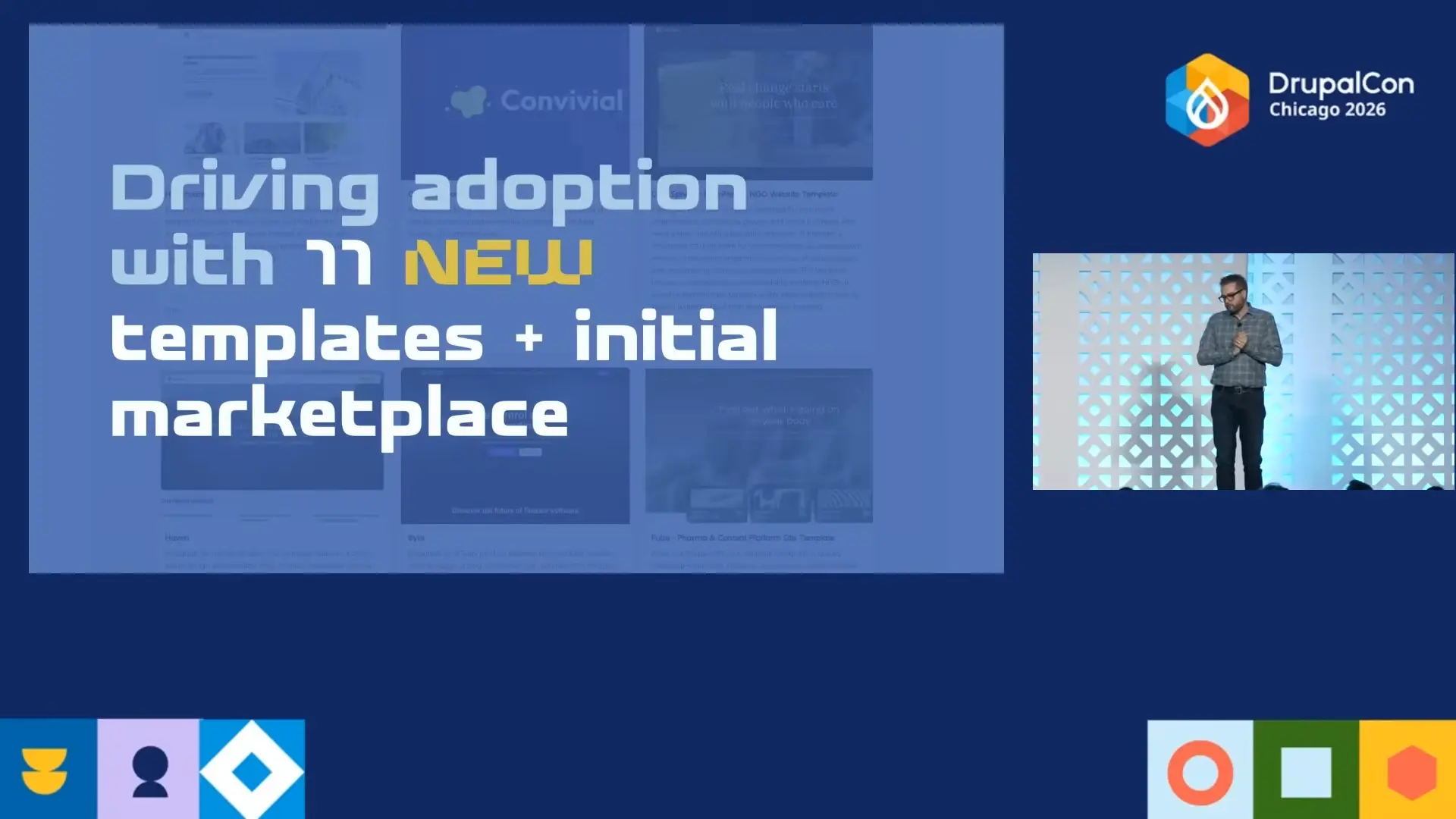
The main innovations introduced by DrupalCMS 2.1 for the enterprise ecosystem include an advanced architecture based on core 11.3, capable of reducing database queries by 50% for uncached pages. Additionally, the native marketplace is updated with 11 industry-specific site templates, specifically designed to drastically cut release times for complex corporate platforms.
The technological infrastructure presented in Chicago redefines performance expectations for large organizations. The DrupalCMS 2.1 engine does not merely update system dependencies; it rewrites the deep logic of data access. This structural optimization translates into immediate savings on cloud computational resources. Metrics show that corporate infrastructures can now handle intense traffic spikes with a fraction of the load on traditional servers, optimizing operational costs according to FinOps principles.
Alongside raw power, the engineering focus shifts to the speed of operational implementation. The new marketplace introduces 11 site templates specific to vertical sectors, from healthcare and education to financial services and public administration, available directly in the integrated marketplace.
This modular architecture radically transforms the classic conception of Drupal development. The months of work typically required for the initial setup of standard business logic and content modeling are eliminated.
For IT decision-makers, adopting this platform represents entry into a new era of content management for business. The technical advantages over legacy architectures and proprietary solutions are tangible and measurable:
- Drastic reduction in time-to-market thanks to pre-assembled configurations for specific industries.
- Optimization of the infrastructural load with a sharp drop in database queries and more aggressive caching.
- Native integration with GenAI services and solutions to streamline complex editorial workflows.
- Standardization of security best practices inherited directly from the evolution of core 11.3.
- The adoption of a fully open-source solution reduces the Total Cost of Ownership and eliminates vendor lock-in.
The impact of these innovations on IT budgets is direct and quantifiable. When engineering teams no longer have to spend tens or hundreds of hours configuring basic roles, permissions, and publishing workflows, the budget can be entirely redirected toward core system integration and advanced customization.
The role of the Context Control Centre in data governance
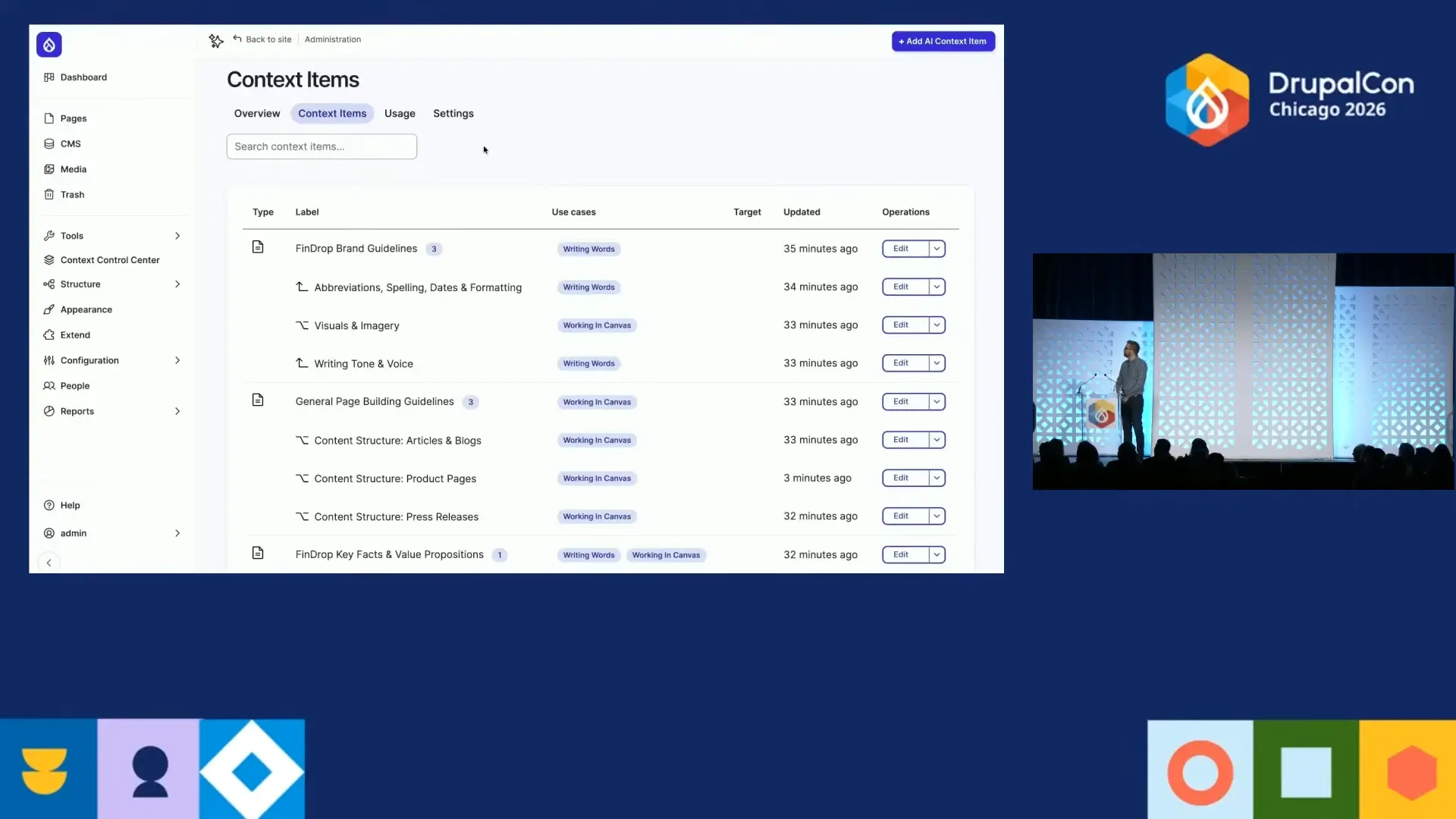
The Context Control Centre (CCC) is the new native subsystem designed to solve the problem of hallucinations in language models applied to the enterprise. Without this tool, every time AI is used, you start from scratch, forcing teams to re-explain the brand, correct the output, and redo the work. The CCC eliminates this inefficiency by allowing you to define tone of voice, audience, policies, and design just once.
Through the CCC, IT teams encode the corporate context via guidelines, brand voice, tone of voice, design systems, analytical data, and regulatory requirements (even in different languages). And they do it only once, directly in the CCC.
When artificial intelligence queries the CMS to create new content, the CCC ensures that the final output is perfectly aligned with corporate compliance standards. In this way, any deviation from the authorized communication perimeter is blocked at the source.
But the corporate context is not static. Products evolve, metrics fluctuate, information becomes obsolete. The CCC development team is exploring the concept of dynamic context: the ability to update the context as it evolves in time and to connect external data sources (like Google Analytics) directly to the orchestration engine.
The goal is an autonomously self-monitoring system. Imagine, for example, a sudden drop in key metrics, or pages with obsolete details that no longer reflect the current features of a product or service. With a dynamic context, the system would be able to detect these anomalies.
The direction is clear: moving from a context defined once to a context that evolves with the company itself. A CMS that doesn’t just produce brand-aligned content, but proactively flags when that content requires an update and proposes contextualized corrections. Of course, it is still in an embryonic phase, but it represents the natural frontier of AI orchestration applied to enterprise content management.
Canvas and Display Builder: how does visual creation change in Drupal development?
Visual creation in Drupal development is changing radically through the use of AI agents capable of transforming text documents into production-ready pages. Tools like Canvas (the flagship tool promoted by the AI Initiative) allow for rapid prototyping guided by artificial intelligence, while more mature solutions like Display Builder ensure the rigorous application of complex design systems on a large scale.
The latest practical demonstration of Canvas’s capabilities, in the plenary session in Chicago, shows a constant evolution of the tool, combining visual building and AI generation capabilities. A raw text document, containing only product specifications and unformatted copy, was converted into a complete web page in a matter of minutes.
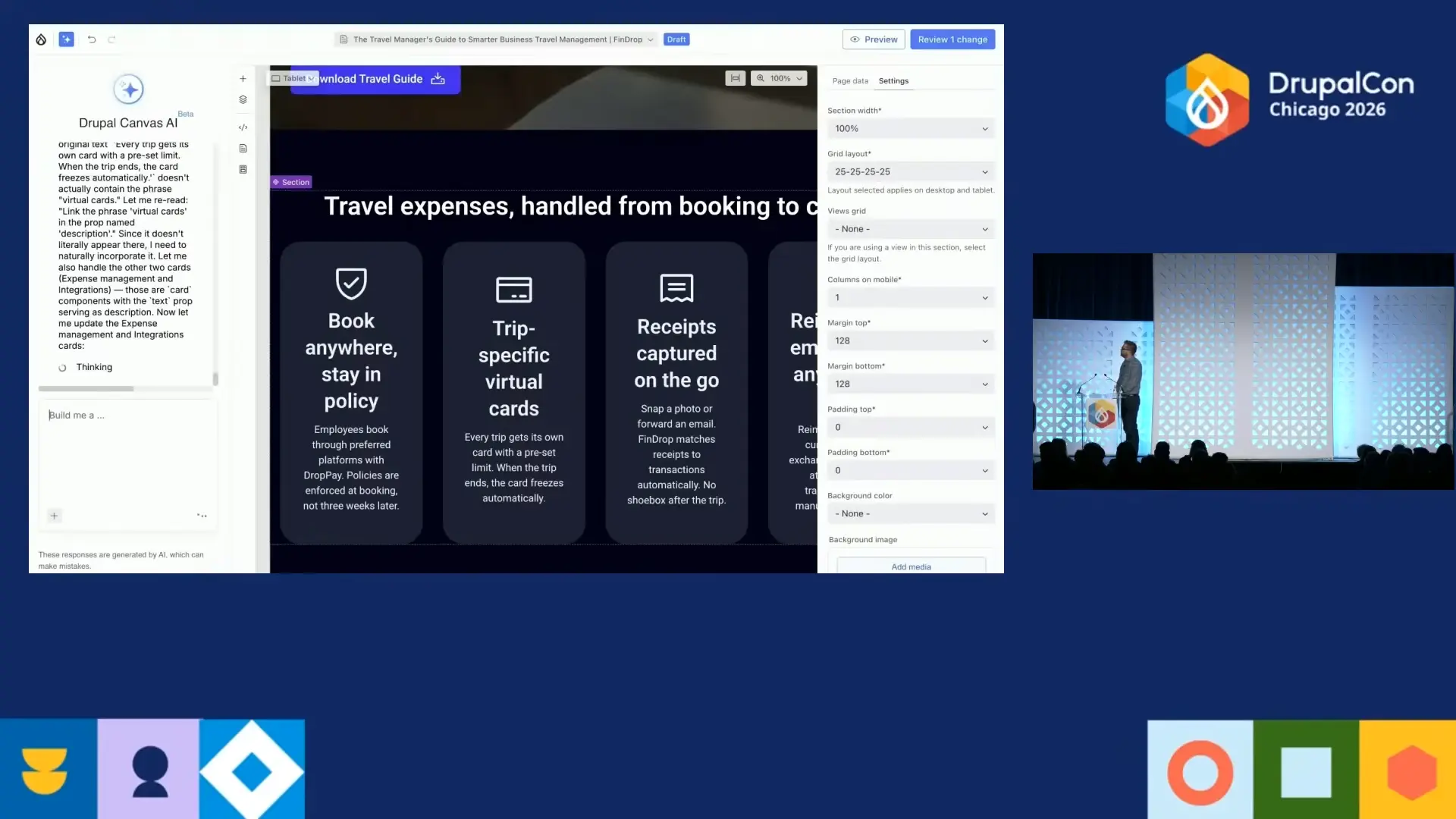
This level of automation firmly positions the Drupal ecosystem at the top of AI-powered tools for accelerating the delivery of complex interfaces.
Unlike disposable prototypes created by external tools, Canvas operates natively within the CMS. Language models interpret the creator’s intent and map the content onto the visual components available in the system, keeping the permission structure, translation logic, cross-linking, and SEO metadata intact. The result is not a mockup to be rebuilt, but a production-ready page integrated into the corporate editorial workflow.
The new AI-assisted workflow transforms traditional frontend operations:
- Loading text specifications or product briefs directly into the CMS interpretation engine.
- Semantic analysis by AI to identify the logical structure, including headings, calls to action, and structured data.
- Automatic generation of the visual layout by applying predefined components and Canvas typographic rules.
- Human intervention for final accessibility validation, aesthetic refinement, and formal approval for publication.
For IT directors and product managers, understanding the integration of Canvas and native design systems becomes fundamental to evaluating the trade-off between execution speed and global visual standardization. While Canvas excels at rapidly generating new views, large enterprise architectures often require a higher level of architectural control over design tokens.
The solid alternative: Display Builder and design system integration
In contrast to the generative and prototyping-focused approach, the open-source ecosystem offers solutions specifically designed for visual governance on a global scale. During our Drupal X Business event, Michael Fanini presented Display Builder, a more mature visual builder developed to meet the most stringent needs of large omnichannel organizations.
Unlike tools focused on instantaneous speed, Display Builder offers deep and native support for complex corporate design systems (and is completely integrated with the ecosystem of modules and themes UI Suite). This feature ensures that every single component inserted into the page meticulously respects brand constraints, a non-negotiable requirement when providing development services and solutions for enterprises and institutions, such as multinational pharmaceutical companies or banking institutions.
To delve deeper into the potential of this enterprise visual architecture, we invite you to watch the full talk on our YouTube channel.
How does the Drupal AI 1.3 module guarantee corporate data security?
The Drupal AI 1.3 module guarantees corporate data security through a native Guardrails system that intercepts and filters communications with Large Language Models. This architecture applies pre- and post-processing validation rules, blocking the exposure of sensitive information and ensuring total regulatory compliance before publication.
The maturity reached by the open-source ecosystem transforms the Drupal CMS into a true enterprise-grade platform for the secure orchestration of language models. With the release of version 1.3 of the Drupal AI module, the community has established a new de facto standard for organizations seeking reliable architectures in the field of AI software development.
This release tackles head-on the main security issues plaguing CTOs in the AI space: the concrete risk of data leaks and the consequent loss of control over proprietary information, the hallucinations of probabilistic models, and the potential reputational damage of AI output not aligned with the brand.
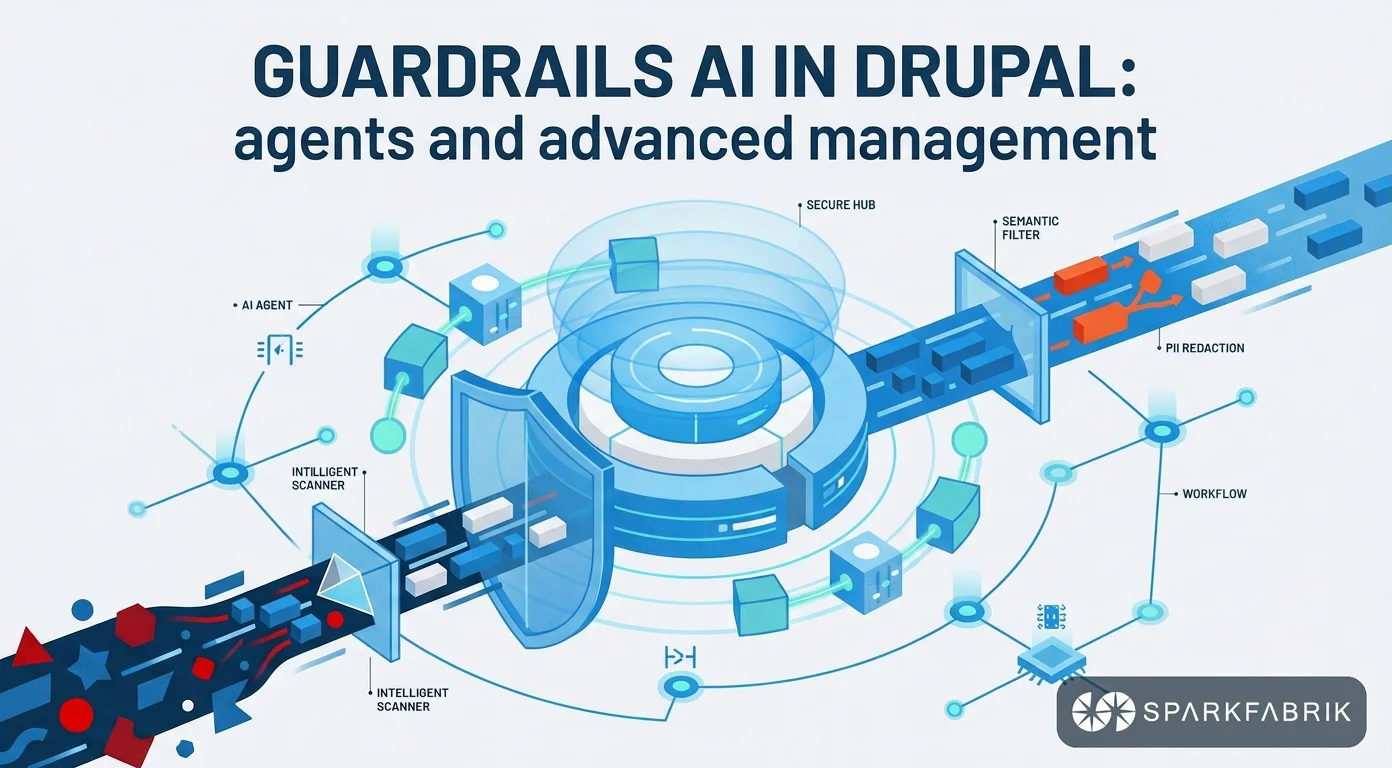
The core of this infrastructural security is represented by the Guardrails system, a fundamental architectural component developed and contributed directly by the SparkFabrik team (discover all our contributions to Drupal AI).
As detailed in the article Guardrails AI in Drupal, we designed this protection layer to act as a bidirectional and real-time semantic firewall. Before a request is sent to external providers, the system proactively verifies the absence of personally identifiable information (PII), access credentials, or trade secrets.
Similarly, the post-processing phase analyzes the generated output to ensure compliance with current regulations, internal policies, and copyright restrictions. This architectural approach demonstrates how modern solutions must integrate robust safety nets, observable through standards like OpenTelemetry, around generative models.
Data security is no longer an optional add-on to be evaluated at the end of a project, but the indispensable foundation upon which to build any corporate automation initiative. Once the data security perimeter is locked down, companies can finally focus on the true value multiplier: the strategic orchestration of autonomous agents.
Why does the agentic-first approach redefine the role of AI software development companies?
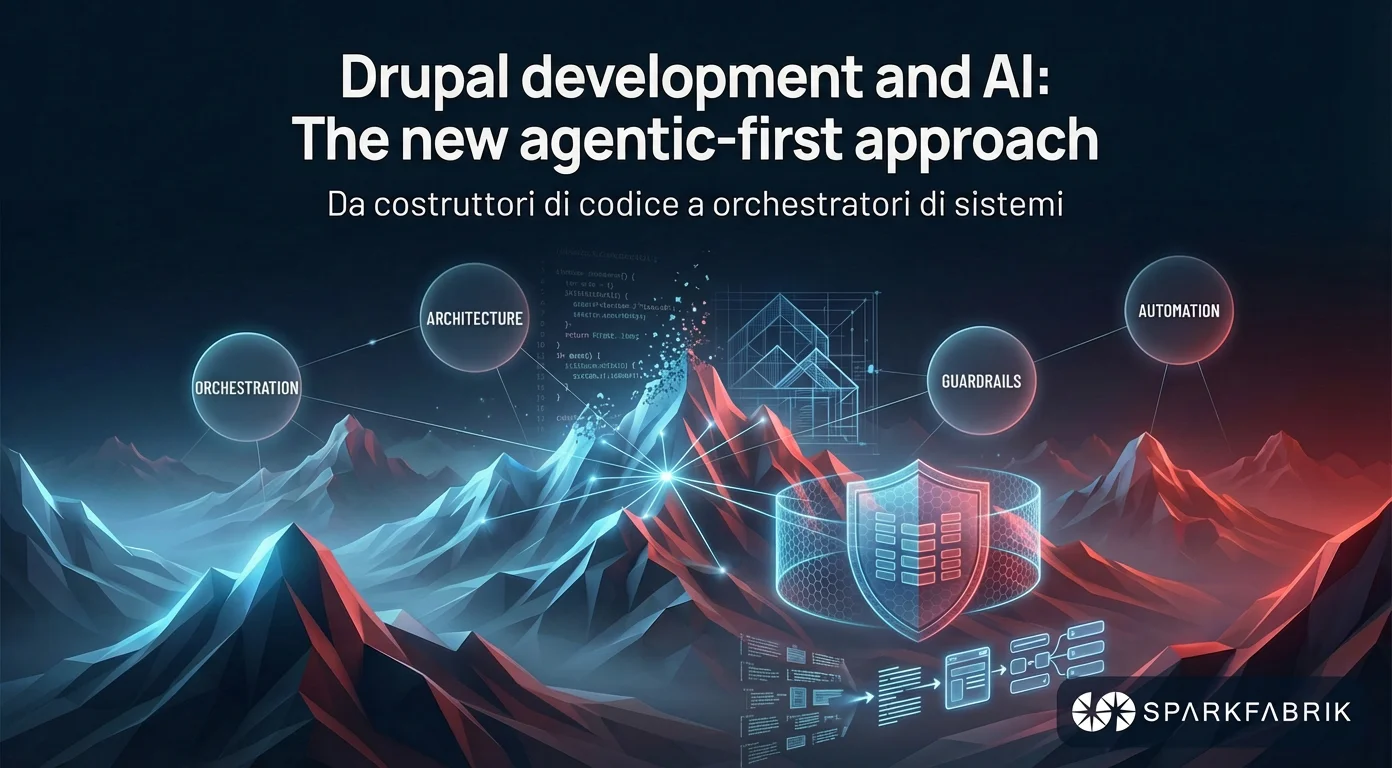
The agentic-first approach redefines the role of development companies, transforming them from code executors to orchestrators of intelligent systems. Artificial intelligence does not replace engineers, but amplifies their architectural capabilities, allowing a single experienced professional to generate the qualitative and quantitative output of an entire team.
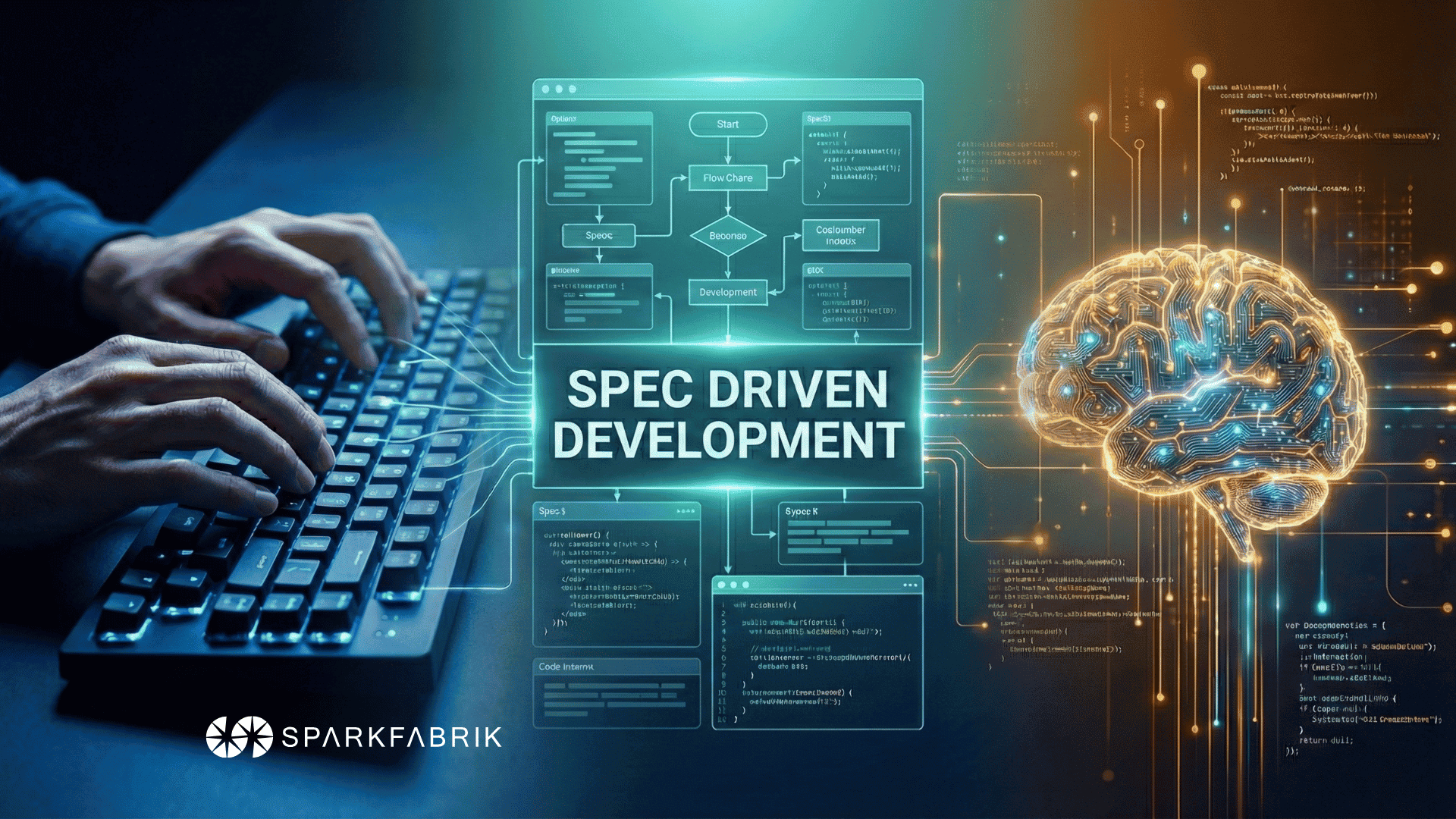
The practical implementation of this agentic-first model implies the integration of Artificial Intelligence as a native architectural component. The operational center of gravity is shifted from manual programming to the orchestration of AI models and agents and the configuration of automated workflows. And this requires precise technical knowledge gained from experience in real projects, Spec Driven Development practices, and rigorous data governance to ensure scalability and security.
Instead of writing individual functions, IT teams define the rules of engagement for multiple AI agents collaborating to solve complex tasks, from code refactoring to generating automated tests. This means being able to explore concrete application scenarios based on agentic AI that reduce bottlenecks in software releases, ensuring previously unimaginable operational scalability.

SparkFabrik’s vision embraces this structural transformation. Treating Artificial Intelligence as a simple external API enormously limits a platform’s potential. Conversely, designing systems where autonomous agents operate within a secure perimeter allows for the automation of entire business processes.
In our daily operational framework, we encode this transformation with an unequivocal principle: artificial intelligence does not replace you, it exposes you.
If you know what you want, it multiplies; if you don’t know, it amplifies errors.
The most glaring and documented demonstration of this augmented productivity came from the work of developer Jurgen Haas on the ECA (Event-Condition-Action) module. Assisted by advanced artificial intelligence tools, a single senior developer wrote, validated, and documented 90,000 lines of code in just six weeks.
This volume of work certifies that individual output is destined to scale dizzily, but only if you know what you want and if you start from a solid base of skills that allow you to orchestrate the work, holding the reins firmly.
To successfully implement the agentic-first approach, the architecture is based on three crucial phases:
- The design and implementation of centralized orchestration systems to robustly yet flexibly manage skills, system prompts, agent profiles, MCP protocols, and custom tools.
- The integration of guardrails and advanced security systems, rigorously applying DevSecOps practices to protect corporate data flows.
- The application of automated governance policies that validate the output of AI agents through automated testing prior to publication.
Software development companies that limit themselves to selling manual programming hours are destined for rapid obsolescence. The enterprise market exclusively rewards those who know how to govern systemic complexity and orchestrate ecosystems of intelligent agents.
Spec Driven Development and the harmony between skills and relationships
In an ecosystem driven by Artificial Intelligence, the quality of the generated output depends entirely on the precision of the initial specifications. SparkFabrik’s operational strategy is firmly based on Spec Driven Development. Language models operate exclusively within the boundaries outlined by system prompts and architectural rules. An ambiguous requirement, which in the past would have required clarification among developers, today translates into a large-scale hallucination or an application outage.
Consequently, the role of the CTO and VP of Engineering is increasingly focused on validating information architecture and data security. The value of technical management shifts from source code review to the definition of unassailable API contracts and the verification of access policies. The success of an enterprise Drupal development project is measured today by the robustness of its specifications, which act as the true source code for AI agents.
The market is clearly rewarding entities capable of bridging this gap, transforming agencies from simple labor providers into strategic consultants. Fundamental to the transition, however, is understanding that the commoditization of code is not something to be feared, but a profound change to be managed with clear strategy and governance.
AI automates execution, but strategy requires empathy and a deep understanding of the client’s business on the one hand, and training and change management internally on the other. As we openly declare in our company Playbook, technology changes at a dizzying pace, but our founding principles remain steadfast.
“What won’t change is why this company exists. Our vision has always been harmony between skills and human relations.”
The future of IT belongs to those who can balance the computational power of autonomous agents with the irreplaceable human ability to build lasting relationships of trust.
DrupalCon Chicago 2026: what are the impacts and takeaways?
What should we take away from DrupalCon Chicago 2026? The message for decision-makers is clear: the modernization of enterprise systems no longer involves the endless manual rewriting of code, but rather the agentic approach.
Contemporary Drupal development represents the true vanguard in the orchestration of autonomous agents within an intrinsically secure, scalable framework governed by clear rules. From the optimized performance of core 11.3 to the rigorous management of semantic context via the Context Control Centre, the open-source platform confirms itself as the platform of choice for large organizations that reject the vendor lock-in of proprietary models.
SparkFabrik does not limit itself to observing market trends or passively using these new generative tools. As demonstrated by the release of the Guardrails system and other contributions, we are actively committed to forging the technologies that define the new global standards for security, governance, and development. We position ourselves as the ideal strategic partner to guide companies through the treacherous complexities of application modernization and the secure adoption of artificial intelligence models.
Explore our custom AI solutions and speak with our experts for tailored architectural consulting, designed to solve the specific challenges of your organization.