

Drupal 10 is expected to be released in December 2022 . In this article, we clarify the situation, listing the main new features of Drupal 10 and exploring the challenges you might encounter when upgrading from previous versions.
The release of Drupal 10 is just around the corner. The latest version of the popular open-source CMS promises an improved user experience and an easy upgrade from Drupal 9. However, there are still some pitfalls when it comes to upgrading from previous versions.
Drupal 10, 9, 8 and 7: which versions coexist and how long will they be supported
As we write this article, it is November 2022. There is one month left until the release of Drupal 10 and, at this time, two different Drupal versions coexist: Drupal 7 and Drupal 9.
Drupal 8 was supported until November 2021, since most Drupal 8 installations were upgraded to version 9 thanks to the smooth upgrade process. If your site is still running Drupal 8, you should plan the upgrade to version 9 as soon as possible to keep up with the upcoming changes.
Returning to the currently supported versions, since January 2011 — the date of its first official release — Drupal 7 has been used globally to build many extremely complex web applications. In other words, many large organizations still depend on Drupal 7 and, furthermore, their upgrade plans have been slowed down by the pandemic. These circumstances convinced the Security Team and founder Dries Buytaert to postpone the end of Drupal 7 support until November 2023, extending previously set deadlines. For this reason, it is hard to imagine a further postponement.
Drupal 9 will also be supported until November 2023, which is when Symfony version 4 — whose many components are integrated into Drupal 9 — will no longer be maintained. For those who want a timely upgrade to Drupal 10, now is the time to plan the transition.
YOU MIGHT ALSO BE INTERESTED IN:
Why is the new version arriving in 2022?
If you follow the Drupal community, you already know that version 7 will be supported much longer than originally planned, and certainly longer than Drupal 9. Why?
The biggest difference between Drupal 7 and Drupal 8 (and later versions) is the use of the Symfony PHP framework, through which Drupal adopted a modern, strongly object-oriented programming style, which was far less prevalent in Drupal 7.
The extensive use of Symfony ensures quality and effectiveness, but requires version alignment. Drupal 9, for example, requires Symfony 4, which will no longer be supported from November 2023; therefore, Drupal 10 must be released at least one year before Symfony 4 is phased out to give developers time to upgrade.
Drupal core developers will likely continue to follow a 2-year release cycle for new major versions, as this aligns with the Symfony cycle. Symfony’s release cycle provides support for version 5.4 until November 2025. Drupal 10 is based on Symfony 6. This makes it future-proof. Those responsible for Drupal 7 systems still in operation are now called upon to make a quality leap that will ensure a greater return on investment.
READ ALSO:
Why choose Drupal for complex enterprise websites
An easy upgrade
As with the upgrade from Drupal 8 to Drupal 9, the first version of Drupal 10 will be the same as the last version of Drupal 9, but without the deprecated code. This approach has proven successful, since almost all of the top 100 contrib modules were already compatible on day one of Drupal 9.
Project staff and managers will also be able to monitor the “readiness” of their site for the upgrade to Drupal 10 thanks to the Upgrade Status module. This module flags any areas that need attention to ensure a painless upgrade.
Drupal 10: what’s changing?
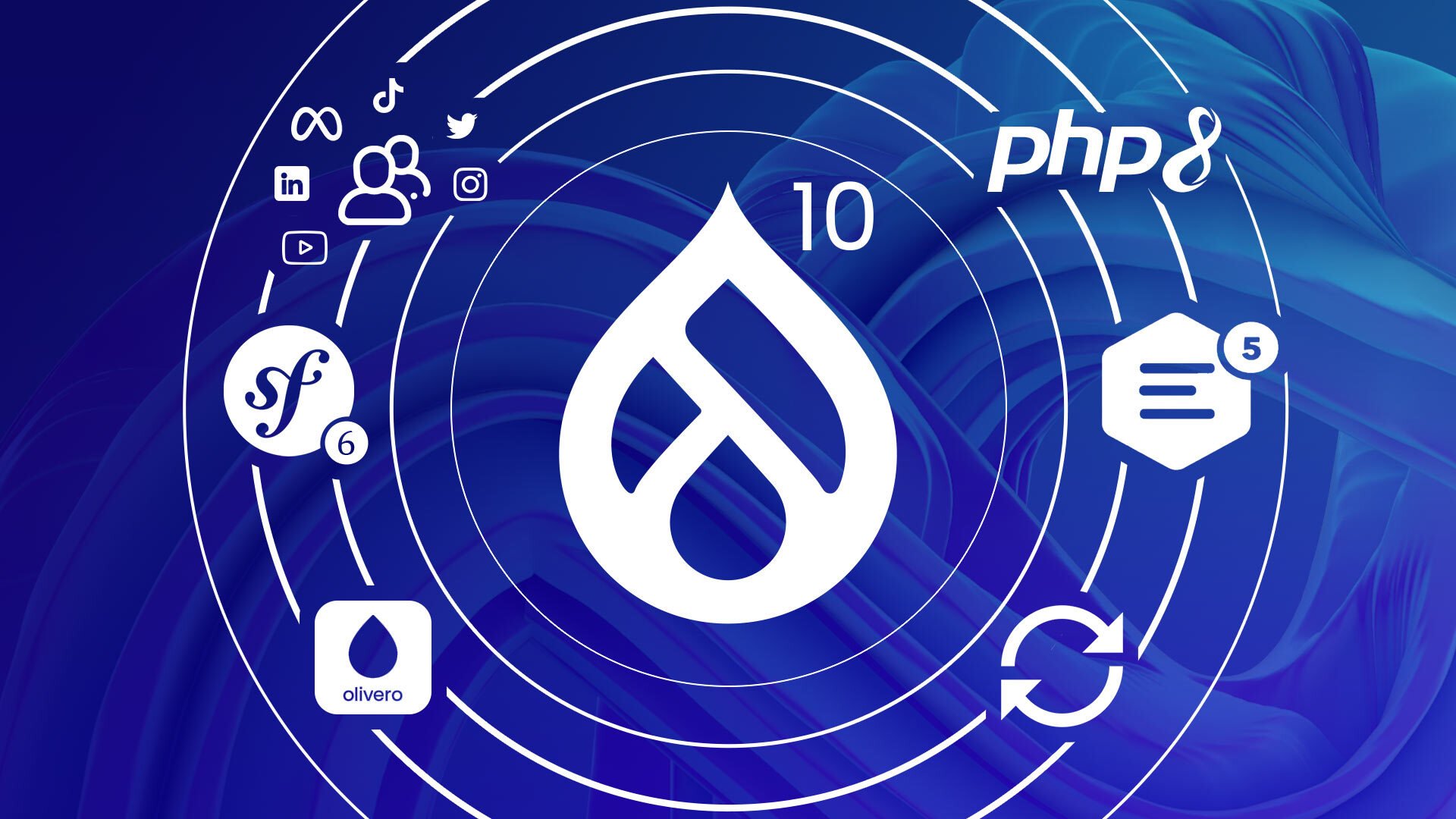
The most noticeable new features in Drupal 10 are the new default themes: Claro for administration and Olivero for the public-facing pages. The layout builder and media have also been improved. Content authors will find the reliable CKEditor in version 5, which makes it easier to create links, upload images, and manage formatting styles, for a better authoring experience. Additionally, thanks to the Automated Update Initiative, end users will benefit from automatic updates for patches and security updates to their site.
Behind the scenes, Drupal developers will notice other significant improvements thanks to the deprecation of obsolete code and enhancements in headless Drupal management. Symfony 6 propels Drupal 10 into the future, raising the minimum PHP version to 8.1.
Let’s recap the list of new features:
User-facing new features (marketing and communications teams):
- New themes, both for the frontend and the backend, respectively Olivero and Claro;
- Better authoring experience thanks to CKEditor 5;
- Automatic updates;
- Integrated search for add-on modules.
Developer-facing new features:
- Removal of deprecated code;
- JavaScript optimization and deprecation of jQuery in the core;
- Use of Symfony 6, with PHP 8.1;
- Progress on headless capabilities with Decoupled menus.
READ ALSO:
Drupal: from CMS to Digital Experience Platform
How to prepare for the Drupal 10 release?
The path to upgrading your Drupal installation to version 10 varies depending on your starting point.
On Drupal 7? Upgrade to Drupal 9 as soon as possible, as this upgrade may take some time.
Starting from Drupal 8? Upgrade to Drupal 9 now. Since Drupal 8 is no longer maintained, your website’s security is not guaranteed. This upgrade should be straightforward and quick.
Already on Drupal 9? Good — at this point, you can act without rushing. Check which official modules support Drupal 10. Within a few months of the Drupal 10 release, most modules should be compatible. However, carefully evaluate the use of modules that are rarely updated.
On version 9.3 or later? Verify that all the modules you are using are compatible with PHP 8.1, then upgrade your server’s PHP version to 8.1.