



In this series of articles, we will explore the different aspects of the DevRel role, why and how we do it at SparkFabrik, and how we see it evolving in the future.
Developer Relations, also known as DevRel, can be defined as the set of activities that a company undertakes to build and maintain a relationship with the developer community, both internal and external. It is a fairly recently formalized role, and it might sound a bit philosophical in its job description: as you will see, it involves many business units, from marketing to development, from sales to human resources.
In 2023, we decided to start a DevRel program, and now we want to share what we have learned. We want to tell you why we did it, the process we followed to make the role and the team operational, the activities carried out during the year, and the results achieved. We hope this series of articles will be useful both for those who are thinking of starting a similar program and for those who are already doing it and want to compare their experience with ours.
Let’s start with a bit of history.
DevRel over the years
The DevRel role has existed for a long time, but only in recent times has it become a job title. In the past, it was often associated with the role of evangelist, a term that many believe was coined by Guy Kawasaki in 1983, when he was working at Apple. In his book The Macintosh Way, he talked about it in the context of a software company:
An evangelist. A good evangelism program has a champion who runs it. This person lives and breathes the program. He is the point person, the guiding light, and the godfather of the developers. He must have a thorough knowledge of the company’s product and technology.
And he added:
Constant contact. Evangelizing developers is like bonding with a child. You need constant contact with them: talking on the phone, seeing their products, and taking them to lunch. A good practice is to send monthly technical notes, tips, tricks, and examples. Developers not only receive information but also feel that the company is on the cutting edge and cares about them.
 Image: Guy Kawasaki
Apple sells hardware and software, so the goal of its evangelists was to convince developers to use its products by demonstrating that they were the best choice. Things change when it comes to a services company or a consulting firm: we will come back to this point later.
Apple’s customers were not just developers, and the same was true for companies like Microsoft or Adobe, but convincing them to promote their product was a great way to reach a wider audience. “The toothpaste preferred by dentists” is a claim we all know, and this is more or less the same strategy.
In fact, it was popularized in the early 2010s by companies like Twilio and New Relic, which were among the first to hire developer advocates and create a developer relations team.
 Image: A Twilio billboard in San Francisco, early 2010s
So they started creating content for developers, speaking at conferences, organizing meetups, and generally connecting with developers where they are, using their language: our language. This trend quickly caught on, and many other companies followed suit: today, virtually every major tech company has a DevRel team, as do many startups and even some open source projects.
Now that the DevRel role is well established, competition is fierce, and even for a company that can invest many resources, it is not easy to stand out from the crowd. As developers, we not only want to use the best quality tools, the trendiest frameworks, the coolest technologies, but we also want to work with companies that share our values, that have a culture, that are inclusive, that make us feel part of a community.
When we started this journey at SparkFabrik, we had all of this in mind: Developer Relations are about building a community that includes our employees and all the developers who come into contact with us, sharing our principles and our vision, sharing our knowledge and experience with the community, contributing to open source projects, and creating content that is useful to others.
So, we had an understanding of the history of the role in our industry and a fairly clear idea of what we thought it should be, but since we are a services company and we don’t sell a product, before even starting to think about how to do it, we had to answer a fundamental question: why should we do it?
Why should we do DevRel?
The first question we asked ourselves was: why should we do DevRel?
The fact that it is an industry trend is not a sufficient reason to do it, and what works for other companies may not work for us, especially in the Italian market where we found few examples to follow.
Many projects and big decisions at SparkFabrik are the result of a collaborative process, and this was no exception: we kicked off a workshop! We involved different departments, from marketing to engineering, from sales to human resources, because we wanted to identify the impact of the role across different areas of the company, and from the very beginning, we recognized that we needed to divide it into two main categories: external and internal.
This concept can usually be applied to traditional marketing as well: you want to attract new customers and new talent, but you also want to retain existing customers and employees. So you need to build brand awareness, establish thought leadership in the industry, be a place where the best talent wants to work, and where customers want to work with you.
Developers are involved in all of these aspects, often even in the decision-making process when a company is looking for a partner for a new project. By engaging with the community and demonstrating expertise and values, a company’s services are more likely to be chosen when solutions are being sought.
In terms of talent acquisition, we agreed that developers tend to prefer companies that engage with the community, contribute to open source projects, and offer resources for developing their skills. By attending events, supporting hackathons, and maintaining a visible presence in the community, a company can attract potential clients and talented individuals.
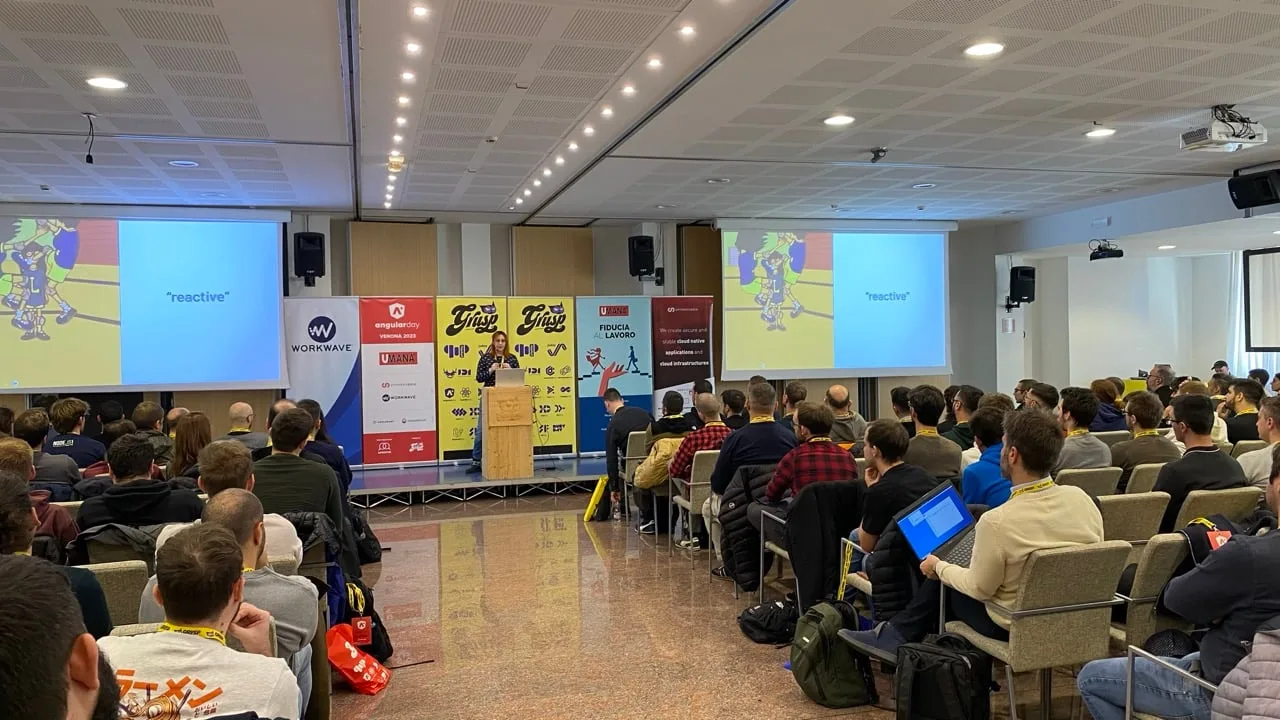 Image: AngularDay 2023
All of this requires relationships. The success of a services company is increasingly intertwined with the developer ecosystem. As technology becomes more complex and interconnected, developers play a key role in driving innovation, service adoption, and influencing decisions: by creating a dedicated DevRel team, we recognized the importance of having strong relationships with the developer community.
DevRel acts as a bridge between our company and the developer community, facilitating open communication, gathering feedback, and creating a collaborative environment.
Investing in DevRel is becoming a fundamental component for staying at the forefront in the competitive technology landscape.
Starting with a question like “Why do we need something?” is an effective way to articulate the purpose and motivations behind a particular initiative. It draws the attention of different stakeholders, leads to a critical analysis process, and lays the foundation for ongoing evaluation, because as circumstances change, the answer can evolve, and periodically revisiting the question ensures that the initiative remains relevant and aligned with the company’s goals.
After agreeing on the fundamental “why” behind implementing a Developer Relations program, we started discussing the more practical aspects of the team: defining objectives and goals, designing activities and strategies, evaluating results and impact.
This will be the topic of the next article in this series, so if you are interested in learning more, stay tuned.