

What is a Cloud Native application and what are its advantages? Let’s dive into the Cloud Native universe by exploring its fundamental concepts. We’ll arrive at an intuitive Cloud Native application definition. But this is just the starting point.
Digital transformation has become a critical topic for business competitiveness. It is not just a technological evolution but also requires a change in processes and company culture for creating and using software.
Through this transformation, companies can achieve faster time-to-market and previously unimaginable flexibility, to satisfy increasingly demanding users and markets. In other words, delivering digital services with better performance than the competition, more innovative features and faster response times.
This is the landscape in which Cloud Native technologies and Cloud Native applications fit. Defining the latter and understanding their advantages will be the goal of this article, intended for those in the discovery phase who are trying to learn more.
The concepts of Cloud Native and Cloud Computing
Before giving a Cloud Native application definition, let’s zoom out and look at the bigger picture. When we talk about Cloud Native, we refer to new technologies and architectures native to the Cloud that enable an approach capable of leveraging the Cloud Computing model to its full potential.
Although closely connected, Cloud Native and Cloud Computing are distinct concepts.
Cloud Computing is an infrastructure that delivers on-demand services via the Internet, ensuring scalability and flexibility. At the foundation of Cloud Computing are shared computing resources, which allow users to scale very quickly and can be paid for based on consumption. In Europe and the US, the major Cloud service providers are Amazon Web Services (AWS), Google Cloud Platform and Azure by Microsoft.
Through Cloud Computing, companies increase the scalability and availability of their applications, whose entire lifecycle is fully automated, from development to production.
The advantages are many, but obviously compared to traditional infrastructures and architectures, in this context it is necessary to transform the software development method. This brings us closer to the concept of Cloud Native and Cloud Native applications.
Cloud Native is indeed an architecture aimed at assembling components developed specifically for the Cloud. It is, in essence, an approach to designing, building and running applications based on a Cloud infrastructure. A method that leverages innovative tools and services, such as continuous integration, containers and orchestrators.
TO LEARN MORE**:** Cloud Vs Cloud Native: what are they? An introductory guide
Cloud Native application definition: what are Cloud Native applications?
We call a “native application” software developed specifically to be used in a particular environment, which can be, for example, a platform.
A Cloud Native application is therefore software designed to reside and operate in the cloud, specifically in Cloud platforms. This is the cloud computing context we defined in the previous section. Cloud Native applications are designed to derive maximum benefits from the software distribution model inherent to Cloud Computing.
Shifting perspective, we can propose another type of Cloud Native application definition.
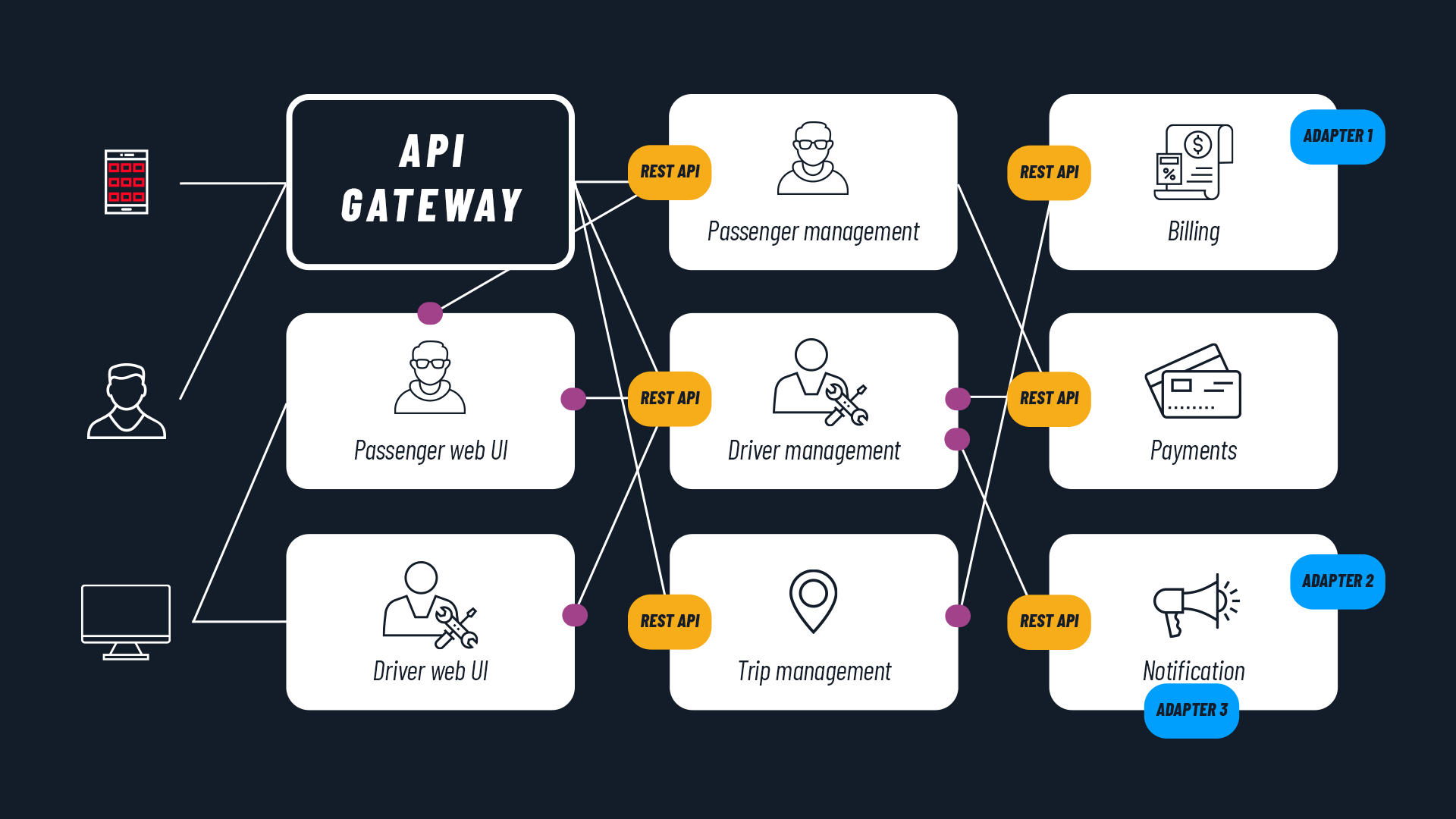
Cloud Native applications are often characterised by a microservices architecture. We can therefore define them as a set of independent and loosely coupled microservices that reside in the Cloud. This structure facilitates the development of new applications and the continuous updating of existing ones. For this reason, developing Cloud Native applications allows companies to respond quickly to contingencies and market demands.
Ultimately, Cloud Native development is an approach to modern application development. A new way for companies to gain competitive advantages in the digital space, through reactive and scalable applications. Specifically designed to provide a consistent development experience and automated management, wherever they are located, in private, public and hybrid Clouds.
What is a Cloud Native architecture?
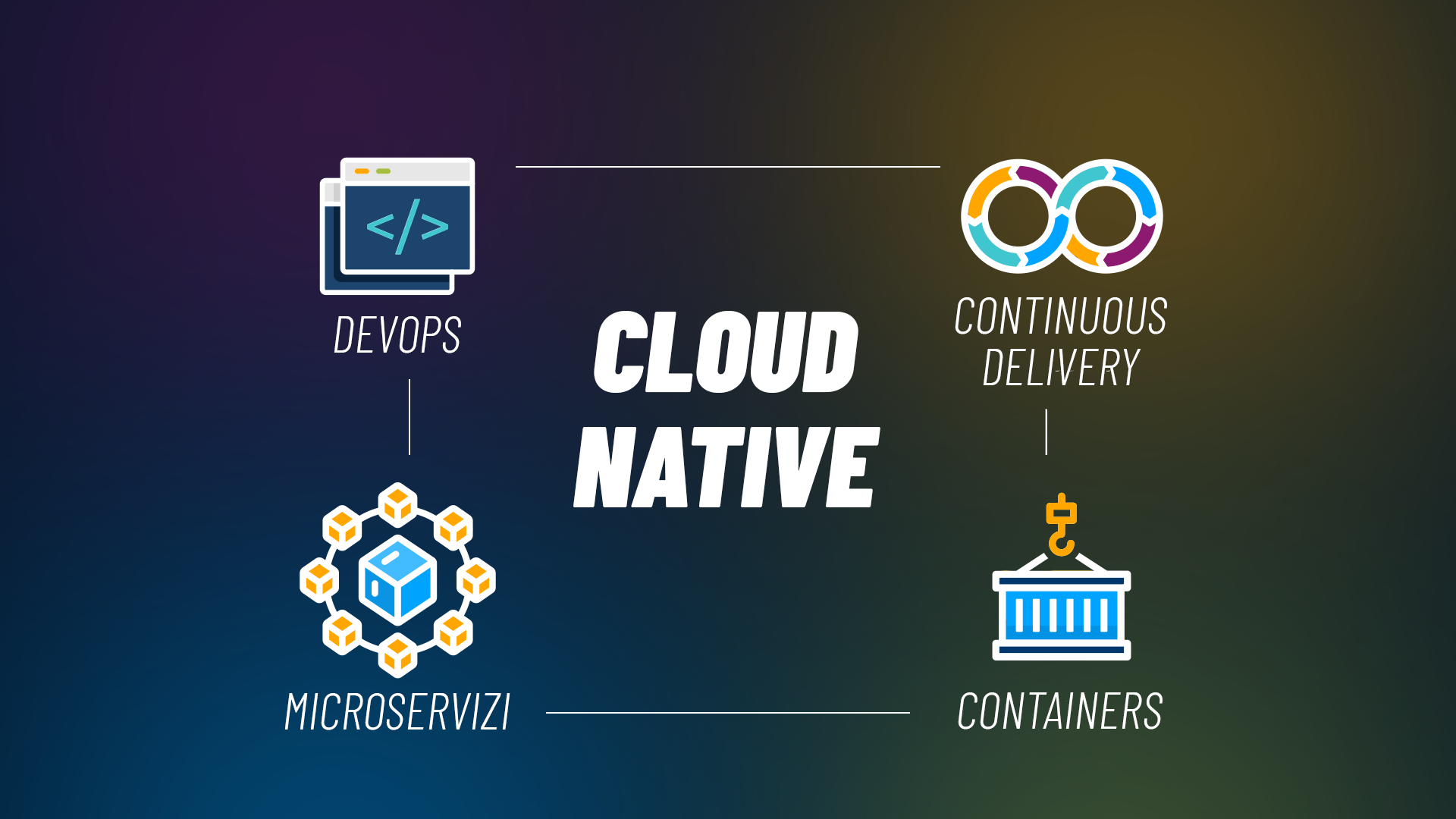
A Cloud Native architecture is based on an exclusively Cloud approach, leveraging resources, systems and services provided by Cloud providers. Cloud Native architecture is characterised by specific attributes and technologies, the main ones being:
- Microservices architecture
- Application containerisation
- Automation
Microservices architecture
Microservices are independent and autonomous services, loosely coupled to each other. Unlike a monolithic approach to application design, microservices allow developers to treat each component as if it were independent from the others.
This ability to decouple the core functionalities of the application allows teams to work on them with greater focus and more iterations. A microservice can thus be updated or rewritten without affecting the rest of the application.
Application containerisation
Containers are a technology for packaging individual autonomous services within independent virtual containers. Containerising an application means placing it in a logical structure that encapsulates all the components necessary for its operation. Unlike virtual machines, containers allow the creation of a minimal, lightweight yet complete virtual environment.
Containers are completely separated from the operating system and the server on which they run and function independently from one another. For all these reasons, containerising applications makes their portability and deployment activities easier and safer.
As we have seen, Cloud Native systems embrace microservices, containers and modern system design to achieve speed and agility. But this is only part of the story. How do you provision the Cloud environments on which these systems run? How do you rapidly distribute software features and updates?
The answer comes from automation. Let’s see how.
Automation
As Cloud Native apps grow larger, increasing levels of automation become essential for managing them. Infrastructure as Code (IaC) is an automation-based approach to infrastructure management and provisioning, and it is an important building block of Cloud Native architectures. Infrastructure and deployments are thus automated, consistent and repeatable.
TO LEARN MORE: Infrastructure as code: what it is and its advantages
The advantages of Cloud Native applications
We have seen two possible Cloud Native application definitions and the characteristics of Cloud Native architectures. But, in practice, what are the advantages of Cloud Native applications?
Let’s revisit the key points more analytically:
The design of Cloud Native applications is based on microservices to be flexible and able to scale rapidly.
Their functionalities are divided into increasingly smaller components, to allow maximum possible reuse.
They are designed to be resilient, because individual services do not compromise the functioning of the entire application.
Given the microservices architecture, the evolutionary process is smoother. It usually allows updates in production, reducing or even eliminating potential downtime.
The microservices architecture and the DevOps approach allow developers to focus on individual components. Thanks to the architecture and automation tools, it is possible to deploy new features to production more frequently.
YOU MIGHT ALSO BE INTERESTED IN: FinOps: what is it? Why switch to Cloud financial management
Cloud Native application development and useful tools
If the definition of a Cloud Native app and its advantages are sufficiently clear, it is time to take a step further.
At this point you might be wondering: all right, but what are the tools needed to develop Cloud Native applications?
Microservices are developed using the best available languages and frameworks. Cloud Native applications are indeed polyglot: services use a wide variety of languages, runtimes and frameworks.
The Cloud Native Computing Foundation, part of the Linux Foundation and the de facto reference for the development of many of the most widespread Cloud Native technologies, has created the CNCF Cloud Native Landscape. It is a collection of open source tools covering many aspects related to Cloud Native application development. A true resource for Cloud Native developers.
To simplify, here is a list of the most suitable tools and languages divided by category:
- Microservices: Node.js is the most widely used language for development, but Kotlin and Golang are also very popular;
- Continuous Integration/Continuous Deployment: developed in automated environments such as Gitlab CI/CD or Github Actions;
- Containers: the universal standard is Docker but other alternatives such as Podman and LXD also exist. Popular services, besides Docker Hub, include Google Container Registry and Quay;
- Container Orchestration: the de facto standard following OCI specifications is Kubernetes; as an alternative technology, Google has developed its Google Cloud Run;
- Infrastructure as Code: many technologies exist for infrastructure management. Terraform and Pulumi are the most important;
- Certificates and secrets: here we find, for example, Cert-manager and Google Managed Certificates for certificate management, and Vault and Sealed Secrets for secrets management;
- Logging, Monitoring and Alerting: for the correct functioning of highly automated environments, the use of advanced observability tools is essential. From EFK to Loki, from Grafana/Prometheus to Datadog (both for monitoring and alerting). Technologies like Jaeger and Zipkin complement the stack with tracing capabilities;
- Service Mesh and API Gateway: in this case, more advanced technologies than traditional ones are required. Ambassador and Kong for API reverse proxies, while for meshes that enable dynamic routing, service discovery, network policies and resilience (such as circuit breakers), there are primarily Istio and Consul.
TO LEARN MORE: Why and how to build a Cloud Native application
How to make the transition to Cloud Native
Moving to Cloud Native allows organisations to stay competitive (or become so!). However, before investing in Cloud Native, it is necessary to understand the organisation’s needs, as well as the transformation costs and timelines. Adopting a Cloud Native architecture does not just mean transferring part of the workload to a Public Cloud provider. It is a completely new and different approach to building infrastructures, developing applications and structuring the work of development teams.
A proper transition to Cloud Native first requires analysis work and the creation of a plan. Once a shared plan has been created and its milestones identified, the transition begins by changing the development approach.
It is necessary to abandon the traditional approach to software development and adopt DevOps culture and processes. Where needed, Agile methodologies such as Scrum or Kanban should be introduced to transparently govern the development process.
Finally, it is necessary to adopt delivery and QA (Quality Assurance) automation processes, through Continuous Integration and Continuous Delivery (CI/CD). These two practices help reduce errors during the integration and distribution of new features and make the development model simpler and more performant.
The essential point, however, is this: you don’t start with technology but with needs and objectives, involving all company teams.
Start here
To adopt Cloud Native, the first thing to do is research. Understand the subject thoroughly so you can make informed decisions. Our Resources section is full of free resources to understand the Cloud Native universe starting from the basics.
In our in-depth articles and whitepapers we put our experience in writing. It is our way of helping IT Leaders and Digital Managers embark on the path that leads to the benefits of the Cloud and Cloud Native applications.
If you have already decided to concretely adopt the Cloud Native approach, we recommend our Cloud Native Journey, a bundle of theoretical and practical sessions to guide you through the transformation of your project.