


Evolving the enterprise software portfolio according to Cloud Native design principles is becoming an essential competitive factor for any organization. Here’s how and why to pursue application modernization.
The Cloud is establishing itself as the winning IT management model, giving organizations infrastructure flexibility and speed in delivering digital services. However, to get the most out of the Cloud, it is very often necessary to proceed with application modernization. This term refers to optimizing the enterprise application portfolio to ensure performance, functionality, and security within the new IT ecosystems.
In this article, we take a deeper look at application modernization, analyzing its benefits and possible implementation approaches.
What is application modernization
Application modernization (also called legacy modernization) refers to updating existing software to align it with the latest development approaches in terms of languages, frameworks, and infrastructure. Code changes, regardless of their depth, are aimed at optimizing performance and functionality within the new architecture, which is now almost invariably Cloud-based (cases where a modern application remains on-prem are extremely rare).
In any case, this is a journey that must be tackled on a case-by-case basis, depending on the type of applications, and in a gradual manner. To run correctly on Cloud infrastructure with appreciable results, not all traditional applications need to undergo massive interventions: in some cases, a few targeted changes are sufficient. Furthermore, the transition to the Cloud must happen seamlessly, without interfering with operations and service continuity: it is therefore better to proceed step by step, performing the migration first and then carrying out optimization work.
In any business context, “refreshing” legacy applications is a necessary move for the very survival of the organization. The new digital enterprise must rely on the availability of flexible, scalable, secure, and powerful services: modern applications are the key to business success today.
Why modernize legacy applications
Designed to run in typical client-server environments, traditional applications are developed and executed following a monolithic approach, as a single unit that encompasses all functions and tightly interconnects related processes. Any error or code change directly affects the behavior of the entire application, so every intervention requires thorough testing, a full software update, and a new deployment; the result is, in many cases, service interruption for a more or less prolonged period.
Monolithic applications also do not allow for changes at the underlying technology or architecture level. Finally, they have limited scalability, present restrictions when adding features, are often developed by a single vendor or team, and generally have higher infrastructure costs compared to those of a modern application.
The digital-era business, on the other hand, does not tolerate downtime but demands services that are always available, flexible, and fast to implement. Modernizing legacy applications is fundamental to meeting the organization’s needs. Why?
Pivoting toward the Cloud Native model allows you to give new life to the existing application portfolio, so it can meet new requirements and support business strategies. Staying with obsolete applications means losing ground to competitors and putting the brakes on business ambitions: if competitors are advancing thanks to modernization projects, standing still is risky.
Application modernization allows you to generate innovation that benefits the business, while minimizing risks: completely replacing or rebuilding a functioning application that supports a multitude of processes could prove dangerous or, at the very least, particularly costly. Modernization, instead, proceeds gradually, making it possible to keep potential errors under control and spread intervention costs over time.
Application modernization also enables the full transition to the Cloud: in many cases, if legacy solutions can run on the Cloud, the underlying on-premise infrastructure is migrated, with benefits in terms of cost optimization and increased flexibility. This particular approach is called rehosting and represents the first step of modernization, as we will see in a few paragraphs.
From microservices to DevOps, how to modernize applications
If the advantages of application modernization are evident, the related topics, necessary knowledge, and methodologies for proceeding correctly are not as straightforward.
Delving into the architectural aspect, modern applications stand out from monolithic solutions due to their microservices structure: each application is conceived and developed as a set of independent functional units that can be added, removed, or modified individually, without affecting the overall behavior of the system. Microservices are managed by specialized teams that can intervene autonomously to make relevant changes without creating interruptions or service disruptions.
Within modular architectures, the use of APIs becomes necessary to promote the integration and interoperability of different services, accelerating development times for adding further functionalities.
On the infrastructure side, modern applications leverage the advantages of containerization: essentially, applications or microservices run within complete runtime environments (containers), ensuring they function regardless of the underlying hardware and thus guaranteeing full software portability in hybrid and Multi Cloud environments. Thanks to dedicated orchestration platforms (such as Kubernetes, to mention the most well-known open-source solution), containers can be managed dynamically and automatically, addressing the inevitable growth in complexity.
From a process perspective, to seize all the opportunities offered by Cloud Native applications, adopting Agile methodologies and DevOps practices is essential. Agile methodologies divide the development process into sprints (blocks of activities), following an iterative and incremental approach. Each cycle is aimed at delivering an increment (an improvement to the software such as a bug fix or the addition of a feature), which is released and immediately tested by users for feedback collection. The process continues step-by-step until the final release, with the ability to course-correct along the way, ensuring alignment with business expectations.
DevOps practices, on the other hand, foster collaboration between development teams and Operations, reducing application deployment times and automating software lifecycle management.
Having clarified the pillars of the Cloud Native approach, the next step is understanding how to modernize legacy applications. Generally, three possible paths are identified, depending on the specific case, budget, and objectives:
- Rehosting (often referred to as Lift & Shift) involves simply migrating the application to the Cloud, with no or minimal changes;
- Replatforming optimizes the application’s behavior for the transition to the Cloud, through targeted interventions that introduce modern development techniques;
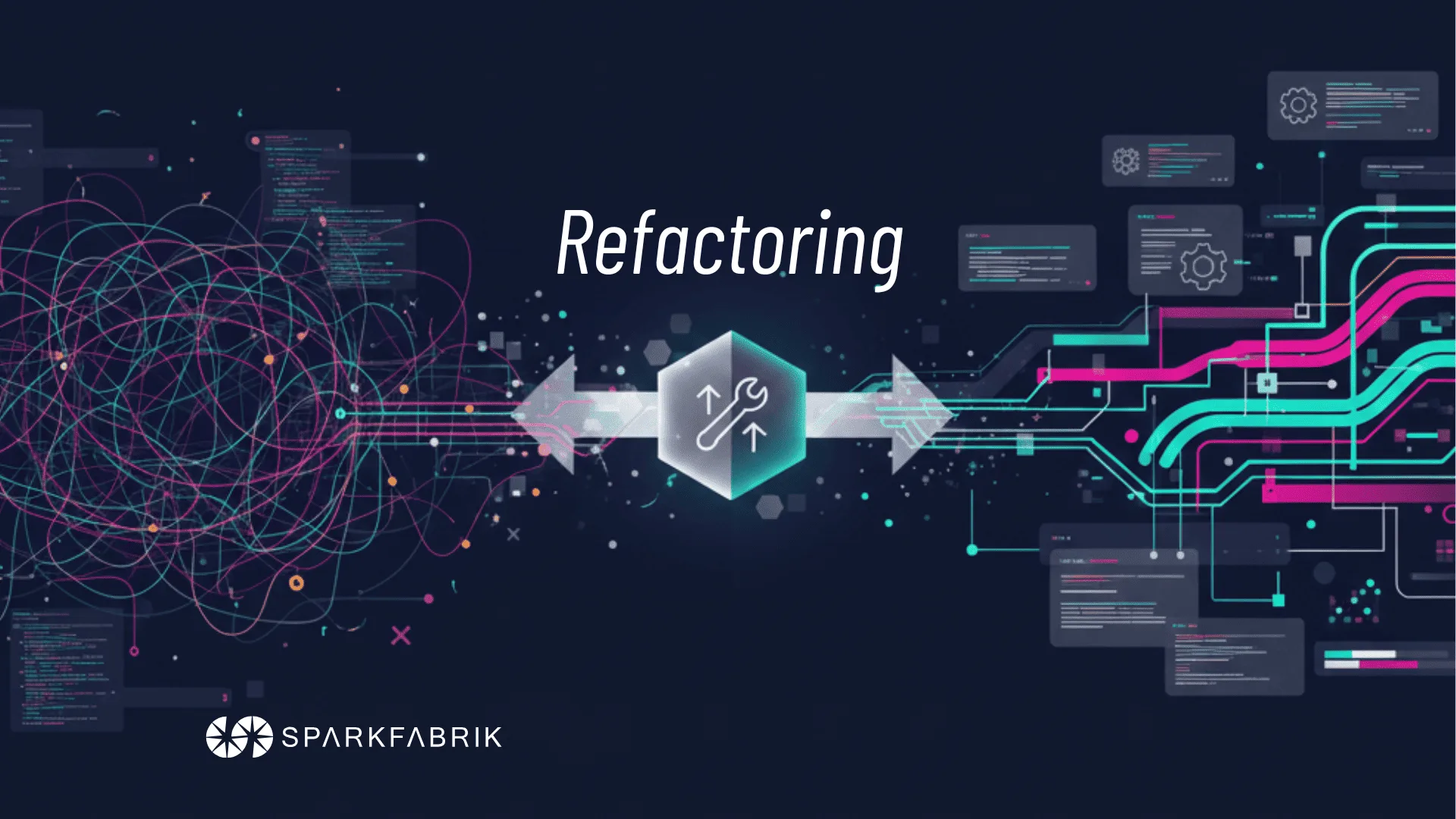
- Refactoring involves partially or completely rewriting the application, according to Cloud Native frameworks to maximize Cloud performance.
12Factor, best practices for developing modern applications
To simplify the application modernization process and, more generally, to guide Cloud Native software development, the 12Factor Methodology suggests a series of best practices that optimize application behavior on the Cloud.
The official document outlines the main objectives of the methodology, which is oriented toward designing applications that:
- are easily replicable across different environments with all dependencies included, thanks to containerization and decoupling from the underlying hardware;
- allow for a clear separation between the codebase and the configurations needed for execution on different systems, further promoting portability;
- can scale massively without requiring significant changes to tools, architecture, and software management processes, thus saving time and costs;
- adopt a stateless approach where each process is independent of previous executions, and components such as memory and file systems are not shared or persistent between consecutive runtimes;
- minimize distances and encourage collaboration between Development teams and Operations staff, enabling shorter development cycles through Continuous Integration and Continuous Delivery processes.
Following the 12 principles for designing modern applications means starting on the right foot to innovate the enterprise application portfolio, cutting IT management costs and delivering the expected business benefits, including strategic flexibility, operational continuity, and speed in service delivery.
Organizing modernization and the required skills
While application modernization is necessary and urgent — at the risk of losing business competitiveness — organizations do not always have the in-house expertise and know-how needed to proceed correctly.
Modernization is certainly the fastest and least risky path for evolving the application portfolio, but it requires a range of technological and methodological knowledge.
First of all, you need an excellent command of Cloud Native development techniques, with a particular focus on microservices architectures, API usage, containers, and orchestration platforms. Additionally, solid skills in Agile methodologies and DevOps practices are needed, which in turn require appropriate change management capabilities.
By adopting new frameworks for software lifecycle management, work organization changes radically, pushing toward faster releases and greater synergy within multidisciplinary teams that can work in parallel while always moving toward common goals. Developers must continuously interact with end users for feedback collection and with Operations staff to trigger a virtuous cycle of continuous delivery.
Expertise in similar application modernization projects proves essential for the success of any initiative: starting from an analysis of the existing application portfolio, you need the ability to identify the correct modernization method (rehosting, replatforming, refactoring) for each application, prioritizing the various interventions. In short, you need to be able to design a coherent, customized, and forward-looking path that allows the entire enterprise portfolio to evolve gradually and fully seize the opportunities of the Cloud.
The success of application modernization initiatives therefore requires a combination of technical skills, strategic vision, and previous experience: this is why relying on certified partners with a specific background proves to be the winning option that maximizes and accelerates returns.
Successful examples of application modernization
Weighing the opportunities and challenges of application modernization, it is not surprising that many companies have already embarked on successful journeys to innovate their software portfolios.
Among the pioneers who have abandoned monolithic architectures to follow Cloud Native principles are multinational giants such as Amazon, eBay, Netflix, PayPal, and Twitter. However, it is not only large Corporations born in the digital era that are taking the modernization path. There are success stories in Italy too, involving established companies operating in more traditional sectors.
For example, the pharmaceutical company Zambon completed a project for the replatforming and redesigning of its corporate websites (Corporate, international versions, product sites), ultimately building a Multi Cloud infrastructure.
SparkFabrik was also chosen by the news outlet ilGiornale.it to manage its Cloud and evolve the CMS platform with a Cloud Native approach.
In conclusion, application modernization is both a necessity and an opportunity that concerns any company, regardless of its industry or size. Falling behind would be a fatal mistake, while turning to an experienced partner could be the most sensible and profitable option for evolving your software portfolio effectively while minimizing risks.